Myo-inositol (OEM/ODM)
$0.01 Excluding tax & Custom ClearanceMyo-Inositol
Chemical / Technical Name:
Myo-Inositol (cyclohexane-1,2,3,4,5,6-hexol)
Common / Alternative Names:
Inositol, Vitamin B8 (historical term), Myo-Inositol
Category:
Vitamin-like compound / Metabolic, hormonal & neurological-support nutraceutical ingredient
Raw Material Type:
Plant-derived or synthetic (bioidentical); Food, nutraceutical & pharmaceutical grade crystalline powder
Key Active Constituents (Typical):
Myo-Inositol ≥99% purity (USP/Ph. Eur./FCC grade-dependent)
Choline hydrogen tartrate (OEM/ODM)
$0.01 Excluding tax & Custom ClearanceCholine Hydrogen Tartrate
Chemical / Technical Name:
Choline Hydrogen Tartrate
(also known as Choline Bitartrate)
Common / Alternative Names:
Choline Bitartrate, Choline Tartrate
Category:
Vitamin-like nutrient / Lipotropic, cognitive & metabolic-support nutraceutical ingredient
Raw Material Type:
Synthetic (bioidentical); Nutraceutical & pharmaceutical grade crystalline powder
Key Active Constituents (Typical):
Choline content typically ~41–43% w/w (elemental choline), tartrate counter-ion
Tyrosine, acetyl-L (OEM/ODM)
$0.01 Excluding tax & Custom ClearanceN-Acetyl-L-Tyrosine (Acetyl-L-Tyrosine)
Chemical / Technical Name:
N-Acetyl-L-Tyrosine (NALT)
Common / Alternative Names:
Acetyl-L-Tyrosine, NALT
Category:
Amino acid derivative / Cognitive, stress & performance-support nutraceutical ingredient
Raw Material Type:
Synthetic (bioidentical); Nutraceutical & pharmaceutical grade crystalline powder
Key Active Constituents (Typical):
N-Acetyl-L-Tyrosine ≥98–99% purity (on dry basis)
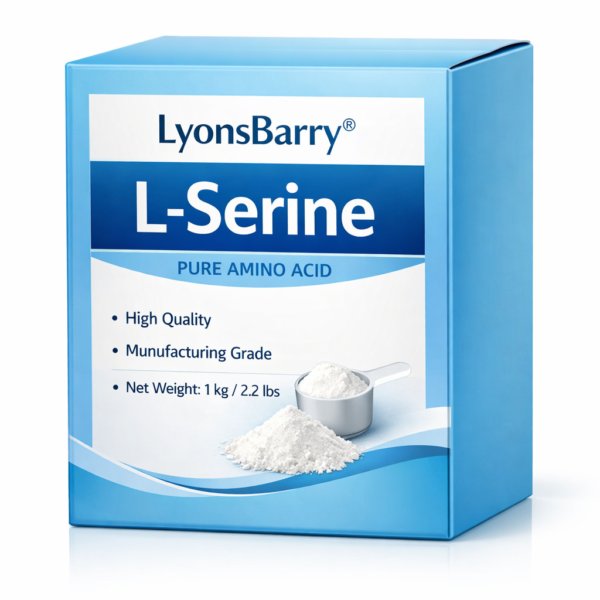
L-Serine (OEM/ODM)
$0.01 Excluding tax & Custom ClearanceL-Serine
Chemical / Technical Name:
L-Serine (2-Amino-3-hydroxypropanoic acid)
Common / Alternative Names:
Serine, L-Serine Amino Acid
Category:
Amino acid / Neurological, metabolic & cellular-support nutraceutical ingredient
Raw Material Type:
Fermentation-derived (bioidentical) or synthetic; Nutraceutical & pharmaceutical grade crystalline powder
Key Active Constituents (Typical):
L-Serine ≥98–99% purity (USP / Ph. Eur. / FCC grade-dependent)
Potassium – L- glutamate (OEM/ODM)
$0.01 Excluding tax & Custom ClearancePotassium L-Glutamate
Chemical / Technical Name:
Potassium L-Glutamate
(Potassium salt of L-Glutamic acid)
Common / Alternative Names:
Potassium Glutamate, L-Glutamic Acid Potassium Salt
Category:
Amino acid salt / Electrolyte, flavor modulator & metabolic-support nutraceutical ingredient
Raw Material Type:
Fermentation-derived (from L-glutamic acid) with potassium neutralization; Food, nutraceutical & pharmaceutical grade crystalline powder
Key Active Constituents (Typical):
L-Glutamate (biologically active amino acid form) with elemental potassium (content varies by grade, typically ~20–25% potassium)
Choline (OEM/ODM)
$0.01 Excluding tax & Custom ClearanceCholine
Chemical / Technical Name:
Choline (2-Hydroxyethyl-trimethylammonium)
Common / Alternative Names:
Choline, Vitamin B4 (historical term)
Category:
Vitamin-like essential nutrient / Lipotropic, cognitive & metabolic-support nutraceutical ingredient
Raw Material Type:
Synthetic (bioidentical); Nutraceutical & pharmaceutical grade
(Common commercial forms: Choline Bitartrate, Choline Citrate, Choline Chloride, CDP-Choline, Alpha-GPC)
Key Active Constituents (Typical):
Elemental choline (content varies by salt/form: ~40–75% w/w, form-specific)
Taurine (OEM/ODM)
$0.01 Excluding tax & Custom ClearanceTaurine
Chemical / Technical Name:
Taurine (2-Aminoethanesulfonic acid)
Common / Alternative Names:
2-Aminoethanesulfonic Acid, Tauric Acid (historical)
Category:
Amino sulfonic acid / Functional amino compound nutraceutical ingredient
Raw Material Type:
Synthetic (bioidentical) or fermentation-derived; Nutraceutical & pharmaceutical grade crystalline powder
Key Active Constituents (Typical):
Taurine ≥99% purity (USP / Ph. Eur. / FCC grade-dependent)
Carnitine tartrate (OEM/ODM)
$0.01 Excluding tax & Custom ClearanceL-Carnitine L-Tartrate
Chemical / Technical Name:
L-Carnitine L-Tartrate (esterified salt of L-carnitine and L-tartaric acid)
Common / Alternative Names:
Carnitine Tartrate, LCLT
Category:
Amino acid derivative / Energy metabolism & performance-support nutraceutical ingredient
Raw Material Type:
Synthetic (bioidentical); Nutraceutical & pharmaceutical grade crystalline powder
Key Active Constituents (Typical):
L-Carnitine content ~65–68% w/w (grade-dependent), tartrate counter-ion
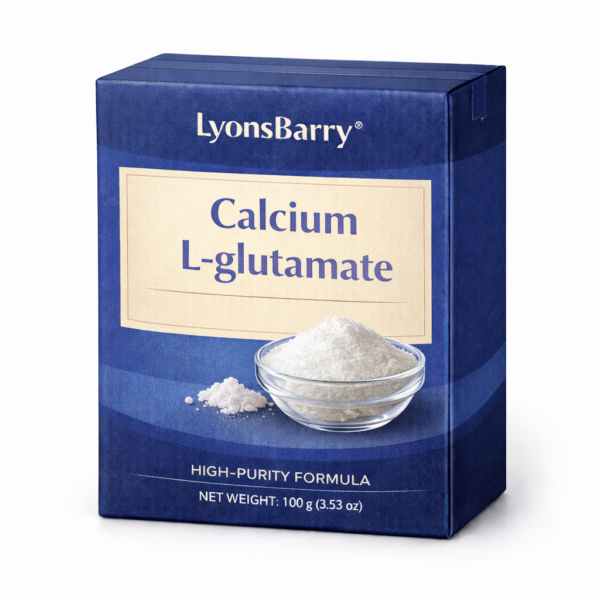
Calcium L- glutamate (OEM/ODM)
$0.01 Excluding tax & Custom ClearanceCalcium L-Glutamate
Chemical / Technical Name:
Calcium L-Glutamate
(Calcium salt of L-glutamic acid)
Common / Alternative Names:
Calcium Glutamate, L-Glutamic Acid Calcium Salt
Category:
Amino acid mineral salt / Calcium source & functional nutraceutical ingredient
Raw Material Type:
Fermentation-derived (from L-glutamic acid) with calcium neutralization; Food, nutraceutical & pharmaceutical grade powder
Key Active Constituents (Typical):
L-Glutamate (biologically active amino acid form) with elemental calcium (content varies by grade, typically ~10–15% calcium)
Megnesium L- aspartate (OEM/ODM)
$0.01 Excluding tax & Custom ClearanceMagnesium L-Aspartate
Chemical / Technical Name:
Magnesium L-Aspartate
(Magnesium salt of L-aspartic acid)
Common / Alternative Names:
Magnesium Aspartate, L-Aspartic Acid Magnesium Salt
Category:
Amino acid mineral chelate / Magnesium supplement & metabolic-support nutraceutical ingredient
Raw Material Type:
Fermentation-derived L-aspartic acid chelated with magnesium; Nutraceutical & pharmaceutical grade crystalline powder
Key Active Constituents (Typical):
Elemental Magnesium (typically ~6–8% w/w, grade-dependent) bound to L-aspartate
L-Lycine-L-glutamate dihydrate (OEM/ODM)
$0.01 Excluding tax & Custom ClearanceL-Lysine-L-Glutamate Dihydrate
Chemical / Technical Name:
L-Lysine-L-Glutamate Dihydrate
(Ionic salt/complex of L-lysine and L-glutamic acid with two molecules of water)
Common / Alternative Names:
Lysine Glutamate Dihydrate, Lysine–Glutamate Complex
Category:
Amino acid complex / Neuro-metabolic & nutritional-support nutraceutical ingredient
Raw Material Type:
Fermentation-derived amino acids (L-lysine & L-glutamic acid) combined and crystallized; Nutraceutical & pharmaceutical grade crystalline powder
Key Active Constituents (Typical):
L-Lysine and L-Glutamate in equimolar proportion; hydration state: dihydrate (water of crystallization, grade-specific)
L- Proline (OEM/ODM)
$0.01 Excluding tax & Custom ClearanceL-Proline
Chemical / Technical Name:
L-Proline (Pyrrolidine-2-carboxylic acid)
Common / Alternative Names:
Proline, L-Proline Amino Acid
Category:
Amino acid / Structural, collagen & metabolic-support nutraceutical ingredient
Raw Material Type:
Fermentation-derived (bioidentical) or synthetic; Nutraceutical & pharmaceutical grade crystalline powder
Key Active Constituents (Typical):
L-Proline ≥98–99% purity (USP / Ph. Eur. / FCC grade-dependent)
L-Citruline (OEM/ODM)
$0.01 Excluding tax & Custom ClearanceL-Citrulline
Chemical / Technical Name:
L-Citrulline (2-Amino-5-ureidovaleric acid)
Common / Alternative Names:
Citrulline, L-Citrulline Base
(Related form: L-Citrulline Malate – different salt, higher solubility)
Category:
Amino acid / Nitric-oxide, vascular & performance-support nutraceutical ingredient
Raw Material Type:
Fermentation-derived (bioidentical) or synthetic; Nutraceutical & pharmaceutical grade crystalline powder
Key Active Constituents (Typical):
L-Citrulline ≥98–99% purity (USP / Ph. Eur. / FCC grade-dependent)
L-Carnitine (OEM/ODM)
$0.01 Excluding tax & Custom ClearanceL-Carnitine
Chemical / Technical Name:
L-Carnitine (β-Hydroxy-γ-trimethylaminobutyric acid)
Common / Alternative Names:
Levocarnitine, Vitamin Bt (historical term)
Category:
Amino acid–like compound / Energy metabolism & mitochondrial-support nutraceutical ingredient
Raw Material Type:
Synthetic (bioidentical) or fermentation-derived; Nutraceutical & pharmaceutical grade crystalline powder or liquid concentrate
Key Active Constituents (Typical):
L-Carnitine ≥98–99% purity (free base);
(Other commercial forms include L-Carnitine L-Tartrate, Acetyl-L-Carnitine, Propionyl-L-Carnitine)
L-Lysine–L-Aspartate (OEM/ODM)
$0.01 Excluding tax & Custom ClearanceL-Lysine–L-Aspartate
Chemical / Technical Name:
L-Lysine–L-Aspartate
(Ionic complex/salt of L-lysine and L-aspartic acid)
Common / Alternative Names:
Lysine Aspartate, L-Lysyl-L-Aspartate (commercial naming varies)
Category:
Amino acid complex / Nutritional, neuro-metabolic & recovery-support nutraceutical ingredient
Raw Material Type:
Fermentation-derived amino acids (L-lysine and L-aspartic acid) combined and crystallized; Nutraceutical & pharmaceutical grade crystalline powder
Key Active Constituents (Typical):
L-Lysine (essential amino acid) and L-Aspartate (conditionally essential amino acid) in defined stoichiometric ratio (grade-specific)
L-Ornithine mono hydrochloride (OEM/ODM)
$0.01 Excluding tax & Custom ClearanceL-Ornithine Monohydrochloride
Chemical / Technical Name:
L-Ornithine Monohydrochloride (L-Ornithine HCl)
Common / Alternative Names:
Ornithine HCl, L-Ornithine Hydrochloride
Category:
Amino acid derivative / Detoxification, liver & performance-support nutraceutical ingredient
Raw Material Type:
Fermentation-derived (bioidentical) or synthetic; Nutraceutical & pharmaceutical grade crystalline powder
Key Active Constituents (Typical):
L-Ornithine (as hydrochloride salt; typically ≥98–99% purity on dry basis)
L-Ornithine (OEM/ODM)
L-Ornithine
Chemical / Technical Name:
L-Ornithine (2,5-Diaminopentanoic acid)
Common / Alternative Names:
Ornithine, L-Ornithine Base
(Commercial salt forms: L-Ornithine HCl, L-Ornithine Aspartate)
Category:
Non-protein amino acid / Urea-cycle, liver & performance-support nutraceutical ingredient
Raw Material Type:
Fermentation-derived (bioidentical) or synthetic; Nutraceutical & pharmaceutical grade crystalline powder
Key Active Constituents (Typical):
L-Ornithine ≥98–99% purity (USP / Ph. Eur. / FCC grade-dependent)
N-acetyl-L-cysteine (OEM/ODM)
$0.01 Excluding tax & Custom ClearanceN-Acetyl-L-Cysteine (NAC)
Chemical / Technical Name:
N-Acetyl-L-cysteine
Common / Alternative Names:
NAC, Acetylcysteine
Category:
Amino acid derivative · Antioxidant · Mucolytic agent
Raw Material Type:
Synthetic API (pharmaceutical & nutraceutical grade)
Key Active Constituents (Typical):
N-Acetyl-L-Cysteine ≥ 98.0% (HPLC/USP compliant)
L-Lycine acetate (OEM/ODM)
$0.01 Excluding tax & Custom ClearanceL-Lysine Acetate
Chemical / Technical Name:
L-Lysine Acetate
Common / Alternative Names:
Lysine acetate, L-Lys acetate
Category:
Essential amino acid salt · Nutraceutical / Pharmaceutical excipient & API
Raw Material Type:
Synthetic / Fermentation-derived amino acid salt (nutraceutical & pharma grade)
Key Active Constituents (Typical):
L-Lysine (as acetate salt) ≥ 98.0%
Acetate counter-ion (enhances solubility & palatability)
L-Hydroxyproline (OEM/ODM)
$0.01 Excluding tax & Custom ClearanceL-Hydroxyproline
Chemical / Technical Name:
L-Hydroxyproline
Common / Alternative Names:
Hydroxy-L-proline, trans-4-Hydroxy-L-proline
Category:
Amino acid derivative · Collagen marker · Nutraceutical / Pharmaceutical ingredient
Raw Material Type:
Fermentation-derived or synthetic amino acid (nutraceutical & pharma grade)
Key Active Constituents (Typical):
L-Hydroxyproline ≥ 98.0% (HPLC/USP compliant)
L-Hydroxylysine (OEM/ODM)
$0.01 Excluding tax & Custom ClearanceL-Hydroxylysine
Chemical / Technical Name:
L-Hydroxylysine (commonly trans-5-Hydroxy-L-lysine)
Common / Alternative Names:
Hydroxy-L-lysine, 5-Hydroxylysine
Category:
Amino acid derivative · Collagen cross-linking amino acid · Nutraceutical / Pharmaceutical ingredient
Raw Material Type:
Fermentation-derived or synthetic amino acid (nutraceutical & pharma grade)
Key Active Constituents (Typical):
L-Hydroxylysine ≥ 98.0% (HPLC/USP compliant)
Glycine (OEM/ODM)
$0.01 Excluding tax & Custom ClearanceGlycine
Chemical / Technical Name:
Glycine (Aminoacetic acid)
Common / Alternative Names:
Aminoacetic acid, Gly
Category:
Non-essential amino acid · Nutraceutical / Pharmaceutical ingredient
Raw Material Type:
Synthetic or fermentation-derived amino acid (nutraceutical & pharma grade)
Key Active Constituents (Typical):
Glycine ≥ 99.0% (HPLC/USP compliant)
L-Glutamine (OEM/ODM)
$0.01 Excluding tax & Custom ClearanceL-Glutamine
Chemical / Technical Name:
L-Glutamine
Common / Alternative Names:
Glutamine, L-Gln
Category:
Conditionally essential amino acid · Nutraceutical / Pharmaceutical ingredient
Raw Material Type:
Fermentation-derived amino acid (nutraceutical & pharma grade)
Key Active Constituents (Typical):
L-Glutamine ≥ 99.0% (HPLC/USP compliant)
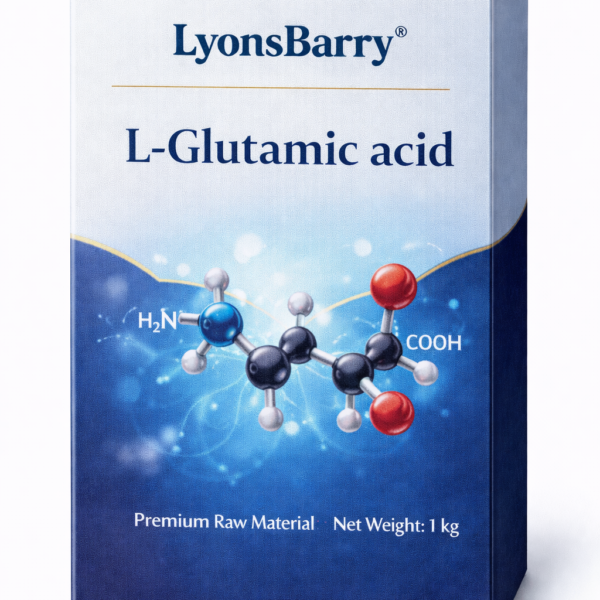
L-Glutamic acid (OEM/ODM)
$0.01 Excluding tax & Custom ClearanceL-Glutamic Acid
Chemical / Technical Name:
L-Glutamic Acid
Common / Alternative Names:
Glutamic acid, L-Glu, (E620 – food grade)
Category:
Non-essential amino acid · Neurotransmitter precursor · Nutraceutical / Pharmaceutical ingredient
Raw Material Type:
Fermentation-derived amino acid (nutraceutical, food & pharma grade)
Key Active Constituents (Typical):
L-Glutamic Acid ≥ 99.0% (HPLC/USP compliant)
L-Carnitine hydrochloride (OEM/ODM)
$0.01 Excluding tax & Custom ClearanceL-Carnitine Hydrochloride
Chemical / Technical Name:
L-Carnitine Hydrochloride
Common / Alternative Names:
L-Carnitine HCl, Levocarnitine Hydrochloride
Category:
Amino acid derivative · Fat metabolism & energy support · Nutraceutical / Pharmaceutical ingredient
Raw Material Type:
Synthetic / fermentation-derived API (nutraceutical & pharma grade)
Key Active Constituents (Typical):
L-Carnitine (as hydrochloride salt) ≥ 98.0% (HPLC/USP compliant)
L-Arginine hydrochloride (OEM/ODM)
$0.01 Excluding tax & Custom ClearanceL-Arginine Hydrochloride
Chemical / Technical Name:
L-Arginine Hydrochloride
Common / Alternative Names:
L-Arginine HCl, Arginine Hydrochloride
Category:
Conditionally essential amino acid · Nitric oxide (NO) precursor · Nutraceutical / Pharmaceutical ingredient
Raw Material Type:
Fermentation-derived amino acid salt (nutraceutical & pharma grade)
Key Active Constituents (Typical):
L-Arginine (as hydrochloride salt) ≥ 98.0% (HPLC/USP compliant)
L-Valine (OEM/ODM)
$0.01 Excluding tax & Custom ClearanceL-Valine
Chemical / Technical Name:
L-Valine
Common / Alternative Names:
Valine, L-Val, (one of BCAAs)
Category:
Essential amino acid · Branched-Chain Amino Acid (BCAA) · Nutraceutical / Pharmaceutical ingredient
Raw Material Type:
Fermentation-derived amino acid (nutraceutical, food & pharma grade)
Key Active Constituents (Typical):
L-Valine ≥ 99.0% (HPLC/USP compliant)
L-Tryptophan (OEM/ODM)
$0.01 Excluding tax & Custom ClearanceL-Tryptophan
Chemical / Technical Name:
L-Tryptophan
Common / Alternative Names:
Tryptophan, L-Trp
Category:
Essential amino acid · Neurotransmitter precursor · Nutraceutical / Pharmaceutical ingredient
Raw Material Type:
Fermentation-derived amino acid (nutraceutical, food & pharma grade)
Key Active Constituents (Typical):
L-Tryptophan ≥ 98.5–99.0% (HPLC/USP compliant)
L-Arginine (OEM/ODM)
$0.01 Excluding tax & Custom ClearanceL-Arginine
Chemical / Technical Name:
L-Arginine
Common / Alternative Names:
Arginine, L-Arg
Category:
Conditionally essential amino acid · Nitric oxide (NO) precursor · Nutraceutical / Pharmaceutical ingredient
Raw Material Type:
Fermentation-derived amino acid (nutraceutical, food & pharma grade)
Key Active Constituents (Typical):
L-Arginine ≥ 98.5–99.0% (HPLC/USP compliant)
L-Tyrosine (OEM/ODM)
$0.01 Excluding tax & Custom ClearanceL-Tyrosine
Chemical / Technical Name:
L-Tyrosine
Common / Alternative Names:
Tyrosine, L-Tyr
Category:
Conditionally essential amino acid · Neurotransmitter & hormone precursor · Nutraceutical / Pharmaceutical ingredient
Raw Material Type:
Fermentation-derived amino acid (nutraceutical, food & pharma grade)
Key Active Constituents (Typical):
L-Tyrosine ≥ 98.5–99.0% (HPLC/USP compliant)
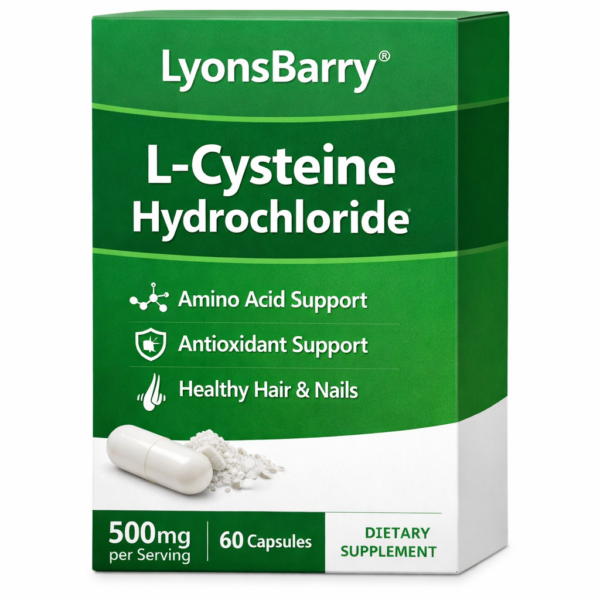
L-Cyststeine hydrochloride (OEM/ODM)
$0.01 Excluding tax & Custom ClearanceL-Cysteine Hydrochloride
Chemical / Technical Name:
L-Cysteine Hydrochloride (commonly L-Cysteine HCl Monohydrate)
Common / Alternative Names:
L-Cysteine HCl, Cysteine Hydrochloride
Category:
Conditionally essential amino acid · Sulfur-containing amino acid · Nutraceutical / Pharmaceutical ingredient
Raw Material Type:
Synthetic or fermentation-derived amino acid salt (nutraceutical, food & pharma grade)
Key Active Constituents (Typical):
L-Cysteine (as hydrochloride salt) ≥ 98.0% (HPLC/USP compliant)
L-Phenylalanine (OEM/ODM)
$0.01 Excluding tax & Custom ClearanceL-Phenylalanine
Chemical / Technical Name:
L-Phenylalanine
Common / Alternative Names:
Phenylalanine, L-Phe
Category:
Essential amino acid · Aromatic amino acid · Nutraceutical / Pharmaceutical ingredient
Raw Material Type:
Fermentation-derived amino acid (nutraceutical, food & pharma grade)
Key Active Constituents (Typical):
L-Phenylalanine ≥ 98.5–99.0% (HPLC/USP compliant)
L- Alanine (OEM/ODM)
$0.01 Excluding tax & Custom ClearanceL-Alanine
Chemical / Technical Name:
L-Alanine (α-Aminopropionic acid)
Common / Alternative Names:
Alanine, L-Ala
Category:
Non-essential amino acid · Nutraceutical / Pharmaceutical ingredient
Raw Material Type:
Fermentation-derived amino acid (food, nutraceutical & pharmaceutical grade)
Key Active Constituents (Typical):
L-Alanine ≥ 98.5–99.0% (HPLC compliant; USP / EP / IP grade)
L-Threonine (OEM/ODM)
$0.01 Excluding tax & Custom ClearanceL-Threonine
Chemical / Technical Name:
L-Threonine (α-Amino-β-hydroxybutyric acid)
Common / Alternative Names:
Threonine, L-Thr
Category:
Essential amino acid · Nutraceutical / Pharmaceutical ingredient
Raw Material Type:
Fermentation-derived amino acid (food, nutraceutical & pharmaceutical grade)
Key Active Constituents (Typical):
L-Threonine ≥ 98.5–99.0% (HPLC compliant; USP / EP / IP grade)
L-Argine L-aspartate (OEM/ODM) (OEM/ODM)
$0.01 Excluding tax & Custom ClearanceL-Arginine L-Aspartate
Chemical / Technical Name:
L-Arginine L-Aspartate (salt of L-Arginine and L-Aspartic Acid)
Common / Alternative Names:
Arginine Aspartate, L-Arginine Aspartate
Category:
Amino acid salt · Energy metabolism & nitric oxide support · Nutraceutical / Pharmaceutical ingredient
Raw Material Type:
Fermentation-derived amino acids combined as a salt (food, nutraceutical & pharmaceutical grade)
Key Active Constituents (Typical):
L-Arginine (as L-aspartate)
L-Aspartic Acid (aspartate counter-ion)
(Combined purity ≥ 98.0%, HPLC compliant; USP / EP / IP grade)

L-Aspartic acid (OEM/ODM)
$0.01 Excluding tax & Custom ClearanceL-Aspartic Acid
Chemical / Technical Name:
L-Aspartic Acid (α-Aminosuccinic acid)
Common / Alternative Names:
Aspartic Acid, L-Asp
Category:
Non-essential amino acid · Energy metabolism & neurotransmitter support · Nutraceutical / Pharmaceutical ingredient
Raw Material Type:
Fermentation-derived amino acid (food, nutraceutical & pharmaceutical grade)
Key Active Constituents (Typical):
L-Aspartic Acid ≥ 98.5–99.0% (HPLC compliant; USP / EP / IP grade)
L-Cysteine hydrochloride (OEM/ODM)
$0.01 Excluding tax & Custom ClearanceL-Cysteine Hydrochloride
Chemical / Technical Name:
L-Cysteine Hydrochloride (commonly L-Cysteine HCl Monohydrate)
Common / Alternative Names:
L-Cysteine HCl, Cysteine Hydrochloride
Category:
Conditionally essential amino acid · Sulfur-containing amino acid · Nutraceutical / Pharmaceutical ingredient
Raw Material Type:
Synthetic or fermentation-derived amino acid salt (food, nutraceutical & pharmaceutical grade)
Key Active Constituents (Typical):
L-Cysteine (as hydrochloride salt) ≥ 98.0% (HPLC compliant; USP / EP / IP grade)
L-Cysteine (OEM/ODM)
$0.01 Excluding tax & Custom ClearanceL-Cysteine
Chemical / Technical Name:
L-Cysteine
Common / Alternative Names:
Cysteine, L-Cys
Category:
Conditionally essential amino acid · Sulfur-containing amino acid · Nutraceutical / Pharmaceutical ingredient
Raw Material Type:
Synthetic or fermentation-derived amino acid (food, nutraceutical & pharmaceutical grade)
Key Active Constituents (Typical):
L-Cysteine ≥ 98.0–99.0% (HPLC compliant; USP / EP / IP grade)
DL-Methionine (OEM/ODM)
$0.01 Excluding tax & Custom ClearanceDL-Methionine
Chemical / Technical Name:
DL-Methionine (racemic mixture of D- and L-Methionine)
Common / Alternative Names:
Methionine, DL-Met
Category:
Essential sulfur-containing amino acid · Nutraceutical / Pharmaceutical ingredient
Raw Material Type:
Synthetic amino acid (food, nutraceutical & pharmaceutical grade)
Key Active Constituents (Typical):
DL-Methionine ≥ 98.5–99.0% (HPLC compliant; USP / EP / IP grade)
L-Lysine hydrochloride (OEM/ODM)
$0.01 Excluding tax & Custom ClearanceL-Lysine Hydrochloride
Chemical / Technical Name:
L-Lysine Hydrochloride (L-Lysine HCl)
Common / Alternative Names:
L-Lysine HCl, Lysine Hydrochloride
Category:
Essential amino acid · Nutraceutical / Pharmaceutical ingredient
Raw Material Type:
Fermentation-derived amino acid salt (food, nutraceutical & pharmaceutical grade)
Key Active Constituents (Typical):
L-Lysine (as hydrochloride salt) ≥ 98.5–99.0%
(HPLC compliant; USP / EP / IP grade)
L-Lysine (OEM/ODM)
$0.01 Excluding tax & Custom ClearanceL-Lysine
Chemical / Technical Name:
L-Lysine
Common / Alternative Names:
Lysine, L-Lys
Category:
Essential amino acid · Nutraceutical / Pharmaceutical ingredient
Raw Material Type:
Fermentation-derived amino acid (food, nutraceutical & pharmaceutical grade)
Key Active Constituents (Typical):
L-Lysine ≥ 98.5–99.0% (HPLC compliant; USP / EP / IP grade)
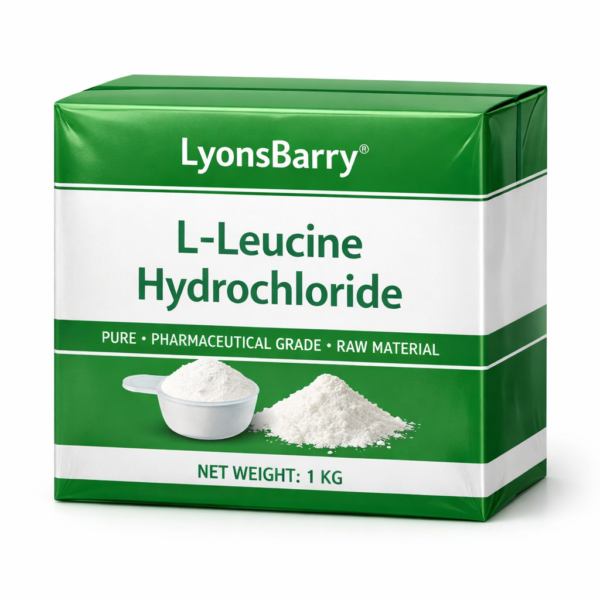
L-Leucine hydrochloride (OEM/ODM)
$0.01 Excluding tax & Custom ClearanceL-Leucine Hydrochloride
Chemical / Technical Name:
L-Leucine Hydrochloride (L-Leucine HCl)
Common / Alternative Names:
L-Leucine HCl, Leucine Hydrochloride
Category:
Essential amino acid · Branched-Chain Amino Acid (BCAA) · Nutraceutical / Pharmaceutical ingredient
Raw Material Type:
Fermentation-derived amino acid salt (food, nutraceutical & pharmaceutical grade)
Key Active Constituents (Typical):
L-Leucine (as hydrochloride salt) ≥ 98.5–99.0%
(HPLC compliant; USP / EP / IP grade)
L-Leucine (OEM/ODM)
$0.01 Excluding tax & Custom ClearanceL-Leucine
Chemical / Technical Name:
L-Leucine
Common / Alternative Names:
Leucine, L-Leu
Category:
Essential amino acid · Branched-Chain Amino Acid (BCAA) · Nutraceutical / Pharmaceutical ingredient
Raw Material Type:
Fermentation-derived amino acid (food, nutraceutical & pharmaceutical grade)
Key Active Constituents (Typical):
L-Leucine ≥ 98.5–99.0% (HPLC compliant; USP / EP / IP grade)
L-Isoleucine hydrochloride (OEM/ODM)
$0.01 Excluding tax & Custom ClearanceL-Isoleucine Hydrochloride
Chemical / Technical Name:
L-Isoleucine Hydrochloride (L-Isoleucine HCl)
Common / Alternative Names:
L-Isoleucine HCl, Isoleucine Hydrochloride
Category:
Essential amino acid · Branched-Chain Amino Acid (BCAA) · Nutraceutical / Pharmaceutical ingredient
Raw Material Type:
Fermentation-derived amino acid salt (food, nutraceutical & pharmaceutical grade)
Key Active Constituents (Typical):
L-Isoleucine (as hydrochloride salt) ≥ 98.5–99.0%
(HPLC compliant; USP / EP / IP grade)
L-Isoleucine (OEM/ODM)
$0.01 Excluding tax & Custom ClearanceL-Isoleucine
Chemical / Technical Name:
L-Isoleucine
Common / Alternative Names:
Isoleucine, L-Ile
Category:
Essential amino acid · Branched-Chain Amino Acid (BCAA) · Nutraceutical / Pharmaceutical ingredient
Raw Material Type:
Fermentation-derived amino acid (food, nutraceutical & pharmaceutical grade)
Key Active Constituents (Typical):
L-Isoleucine ≥ 98.5–99.0% (HPLC compliant; USP / EP / IP grade)
L-Histidine hydrochloride (OEM/ODM)
$0.01 Excluding tax & Custom ClearanceL-Histidine Hydrochloride
Chemical / Technical Name:
L-Histidine Hydrochloride (L-Histidine HCl)
Common / Alternative Names:
L-Histidine HCl, Histidine Hydrochloride
Category:
Essential (conditionally essential) amino acid · Buffering & metabolic support · Nutraceutical / Pharmaceutical ingredient
Raw Material Type:
Fermentation-derived amino acid salt (food, nutraceutical & pharmaceutical grade)
Key Active Constituents (Typical):
L-Histidine (as hydrochloride salt) ≥ 98.5–99.0%
(HPLC compliant; USP / EP / IP grade)
L-Histidine (OEM/ODM)
$0.01 Excluding tax & Custom ClearanceL-Histidine
Chemical / Technical Name:
L-Histidine
Common / Alternative Names:
Histidine, L-His
Category:
Essential (conditionally essential) amino acid · Nutraceutical / Pharmaceutical ingredient
Raw Material Type:
Fermentation-derived amino acid (food, nutraceutical & pharmaceutical grade)
Key Active Constituents (Typical):
L-Histidine ≥ 98.5–99.0% (HPLC compliant; USP / EP / IP grade)
Vitamin K1 (OEM/ODM)
$0.01 Excluding tax & Custom ClearanceVitamin K1
Chemical / Technical Name:
Vitamin K1 (Phylloquinone)
Common / Alternative Names:
Phylloquinone, Phytonadione
Category:
Fat-soluble vitamin · Blood coagulation & bone health support · Nutraceutical / Pharmaceutical ingredient
Raw Material Type:
Synthetic or plant-derived vitamin (food, nutraceutical & pharmaceutical grade)
Key Active Constituents (Typical):
Vitamin K1 (Phylloquinone) ≥ 97.0–99.0%
(HPLC compliant; USP / EP / IP / BP grade)
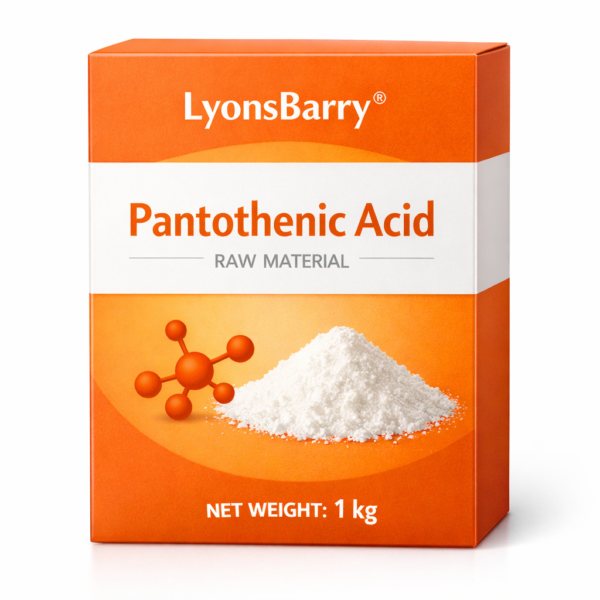
Pantothenic acid (OEM/ODM)
$0.01 Excluding tax & Custom ClearancePantothenic Acid
Chemical / Technical Name:
Pantothenic Acid (commonly supplied as Calcium D-Pantothenate)
Common / Alternative Names:
Vitamin B5, D-Pantothenic Acid, Calcium Pantothenate
Category:
Water-soluble vitamin (B-complex) · Energy metabolism & coenzyme support · Nutraceutical / Pharmaceutical ingredient
Raw Material Type:
Synthetic vitamin (food, nutraceutical & pharmaceutical grade)
Key Active Constituents (Typical):
Pantothenic Acid (as Calcium D-Pantothenate) ≥ 98.0–99.0%
(HPLC compliant; USP / EP / IP / BP grade)
Folic acid (OEM/ODM)
$0.01 Excluding tax & Custom ClearanceFolic Acid
Chemical / Technical Name:
Folic Acid (Pteroylmonoglutamic acid)
Common / Alternative Names:
Vitamin B9, Pteroylglutamic acid, Folate (synthetic form)
Category:
Water-soluble vitamin (B-complex) · Hematopoietic & cellular metabolism support · Nutraceutical / Pharmaceutical ingredient
Raw Material Type:
Synthetic vitamin (food, nutraceutical & pharmaceutical grade)
Key Active Constituents (Typical):
Folic Acid ≥ 97.0–99.0%
(HPLC compliant; USP / EP / IP / BP grade)

Vitamin D (OEM/ODM)
$0.01 Excluding tax & Custom ClearanceVitamin D
Chemical / Technical Name:
Vitamin D
Vitamin D3: Cholecalciferol
Vitamin D2: Ergocalciferol
Common / Alternative Names:
Calciferol, Cholecalciferol (D3), Ergocalciferol (D2)
Category:
Fat-soluble vitamin · Bone, muscle & immune health support · Nutraceutical / Pharmaceutical ingredient
Raw Material Type:
Vitamin D3: Animal-derived or lichen-derived (synthetic processing)
Vitamin D2: Plant/fungal-derived (yeast-based)
(Food, nutraceutical & pharmaceutical grade)
Key Active Constituents (Typical):
Vitamin D3 (Cholecalciferol) or Vitamin D2 (Ergocalciferol) ≥ 97.0–99.0%
(HPLC compliant; USP / EP / IP / BP grade)
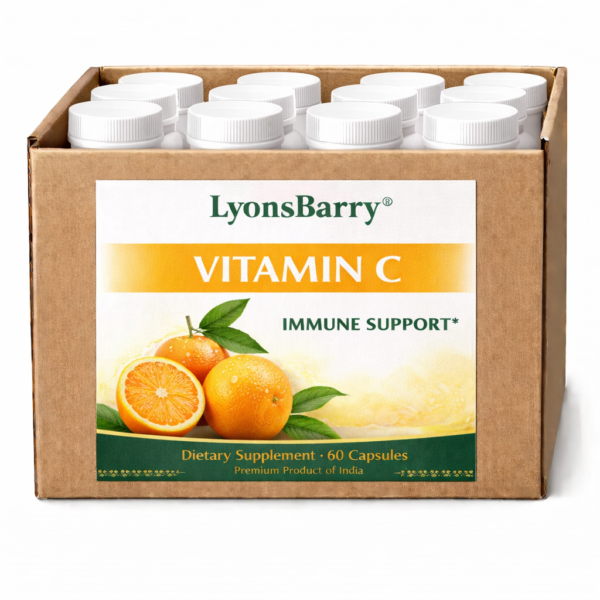
Vitamin C (OEM/ODM)
$0.01 Excluding tax & Custom ClearanceVitamin C
Chemical / Technical Name:
Vitamin C (L-Ascorbic Acid)
Common / Alternative Names:
Ascorbic Acid, L-Ascorbate, Ascorbate
Category:
Water-soluble vitamin · Antioxidant & immune support · Nutraceutical / Pharmaceutical ingredient
Raw Material Type:
Synthetic or fermentation-derived vitamin (food, nutraceutical & pharmaceutical grade)
Key Active Constituents (Typical):
L-Ascorbic Acid ≥ 99.0%
(HPLC compliant; USP / EP / IP / BP grade)
Vitamin A (OEM/ODM)
$0.01 Excluding tax & Custom ClearanceVitamin A
Chemical / Technical Name:
Vitamin A
Retinol
Retinyl Acetate
Retinyl Palmitate
Common / Alternative Names:
Retinol, Vitamin A Acetate, Vitamin A Palmitate
Category:
Fat-soluble vitamin · Vision, immunity & epithelial health support · Nutraceutical / Pharmaceutical ingredient
Raw Material Type:
Synthetic or animal-derived vitamin (food, nutraceutical & pharmaceutical grade)
Key Active Constituents (Typical):
Vitamin A (as Retinol / Retinyl Acetate / Retinyl Palmitate) ≥ 97.0–99.0%
(HPLC compliant; USP / EP / IP / BP grade)

Boron proteonate (OEM/ODM)
$0.01 Excluding tax & Custom ClearanceBoron Proteonate
Chemical / Technical Name:
Boron Proteonate (Boron Proteinate / Boron–Protein Chelate)
Common / Alternative Names:
Boron Proteinate, Boron Chelate, Organic Boron
Category:
Trace mineral chelate · Bone, joint & hormonal health support · Nutraceutical / Pharmaceutical ingredient
Raw Material Type:
Chelated mineral compound (organic boron bound to protein/amino acid matrix)
(Food, nutraceutical & pharmaceutical grade)
Key Active Constituents (Typical):
Elemental Boron: typically 1.0%–5.0% (grade dependent)
Protein / amino acid carrier matrix
(Assay by ICP / validated methods)
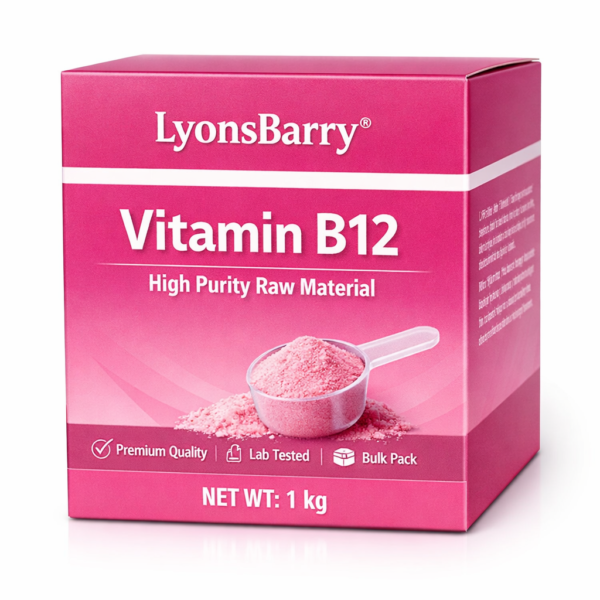
Vitamin B12 (OEM/ODM)
$0.01 Excluding tax & Custom ClearanceVitamin B12
Chemical / Technical Name:
Vitamin B12 (Cobalamin)
Common pharmaceutical forms:
Cyanocobalamin
Methylcobalamin
Hydroxocobalamin
Adenosylcobalamin
Common / Alternative Names:
Cobalamin, Methyl B12, Cyanocobalamin, Hydroxy B12
Category:
Water-soluble vitamin (B-complex) · Hematological, neurological & metabolic support · Nutraceutical / Pharmaceutical ingredient
Raw Material Type:
Fermentation-derived vitamin (food, nutraceutical & pharmaceutical grade)
Key Active Constituents (Typical):
Vitamin B12 (as specified cobalamin form) ≥ 98.0–99.0%
(HPLC / microbiological assay compliant; USP / EP / IP / BP grade)
Vitamin B6 (OEM/ODM)
$0.01 Excluding tax & Custom ClearanceVitamin B6
Chemical / Technical Name:
Vitamin B6
Common pharmaceutical forms:
Pyridoxine Hydrochloride
Pyridoxal-5-Phosphate (P5P)
Pyridoxal
Pyridoxamine
Common / Alternative Names:
Pyridoxine, Pyridoxine HCl, P5P, Pyridoxal Phosphate
Category:
Water-soluble vitamin (B-complex) · Amino acid metabolism & neurological support · Nutraceutical / Pharmaceutical ingredient
Raw Material Type:
Synthetic vitamin (food, nutraceutical & pharmaceutical grade)
Key Active Constituents (Typical):
Vitamin B6 (as Pyridoxine HCl or P5P) ≥ 98.0–99.0%
(HPLC compliant; USP / EP / IP / BP grade)
Vitamin B3 (OEM/ODM)
$0.01 Excluding tax & Custom ClearanceVitamin B3
Chemical / Technical Name:
Vitamin B3
Common pharmaceutical forms:
Niacin (Nicotinic Acid)
Niacinamide (Nicotinamide)
Common / Alternative Names:
Niacin, Niacinamide, Nicotinic Acid, Nicotinamide, Vitamin PP
Category:
Water-soluble vitamin (B-complex) · Energy metabolism & lipid support · Nutraceutical / Pharmaceutical ingredient
Raw Material Type:
Synthetic vitamin (food, nutraceutical & pharmaceutical grade)
Key Active Constituents (Typical):
Vitamin B3 (as Niacin or Niacinamide) ≥ 98.0–99.0%
(HPLC compliant; USP / EP / IP / BP grade)
Niacin (OEM/ODM)
$0.01 Excluding tax & Custom ClearanceNiacin
Chemical / Technical Name:
Niacin (Nicotinic Acid)
Common / Alternative Names:
Vitamin B3, Nicotinic Acid, Vitamin PP
Category:
Water-soluble vitamin (B-complex) · Lipid metabolism & cardiovascular support · Nutraceutical / Pharmaceutical ingredient
Raw Material Type:
Synthetic vitamin (food, nutraceutical & pharmaceutical grade)
Key Active Constituents (Typical):
Niacin (Nicotinic Acid) ≥ 98.0–99.0%
(HPLC compliant; USP / EP / IP / BP grade)
Vitamin B2 (OEM/ODM)
$0.01 Excluding tax & Custom ClearanceVitamin B2
Chemical / Technical Name:
Vitamin B2 (Riboflavin)
Common / Alternative Names:
Riboflavin, Lactoflavin
Category:
Water-soluble vitamin (B-complex) · Energy metabolism & antioxidant support · Nutraceutical / Pharmaceutical ingredient
Raw Material Type:
Synthetic or fermentation-derived vitamin (food, nutraceutical & pharmaceutical grade)
Key Active Constituents (Typical):
Riboflavin ≥ 98.0–99.0%
(HPLC compliant; USP / EP / IP / BP grade)
Vitamin B1 (OEM/ODM)
$0.01 Excluding tax & Custom ClearanceVitamin B1
Chemical / Technical Name:
Vitamin B1
Common pharmaceutical forms:
Thiamine Mononitrate
Thiamine Hydrochloride
Common / Alternative Names:
Thiamine, Thiamin, Aneurin
Category:
Water-soluble vitamin (B-complex) · Energy metabolism & neurological support · Nutraceutical / Pharmaceutical ingredient
Raw Material Type:
Synthetic vitamin (food, nutraceutical & pharmaceutical grade)
Key Active Constituents (Typical):
Vitamin B1 (as Thiamine Mononitrate or Thiamine HCl) ≥ 98.0–99.0%
(HPLC compliant; USP / EP / IP / BP grade)
Thiamine (OEM/ODM)
$0.01 Excluding tax & Custom ClearanceThiamine
Chemical / Technical Name:
Thiamine Mononitrate / Thiamine Hydrochloride
(Vitamin B1; pyrimidine–thiazolium derivative)
Common / Alternative Names:
Vitamin B1, Aneurin, Anti-beriberi factor
Category:
Water-soluble vitamin · Nutraceutical / Pharmaceutical ingredient
Raw Material Type:
Synthetic vitamin (food, nutraceutical & pharmaceutical grade)
Key Active Constituents (Typical):
Thiamine (as Mononitrate or Hydrochloride) ≥ 98.0–102.0%
(Assay compliant with USP / EP / IP / BP specifications)
Vitamin E (OEM/ODM)
$0.01 Excluding tax & Custom ClearanceVitamin E
Chemical / Technical Name:
DL-α-Tocopheryl Acetate / D-α-Tocopherol
(Vitamin E; tocopherol derivative)
Common / Alternative Names:
Vitamin E, Tocopherol, α-Tocopherol, Tocopheryl Acetate
Category:
Fat-soluble vitamin · Antioxidant · Nutraceutical / Pharmaceutical ingredient
Raw Material Type:
Synthetic or natural-origin vitamin (oil or powder form; food, nutraceutical & pharmaceutical grade)
Key Active Constituents (Typical):
DL-α-Tocopheryl Acetate ≥ 50% / 68% / 90% (as specified)
D-α-Tocopherol ≥ 67% – 70% (natural form, IU-adjusted)
(Assay compliant with USP / EP / IP / BP standards)
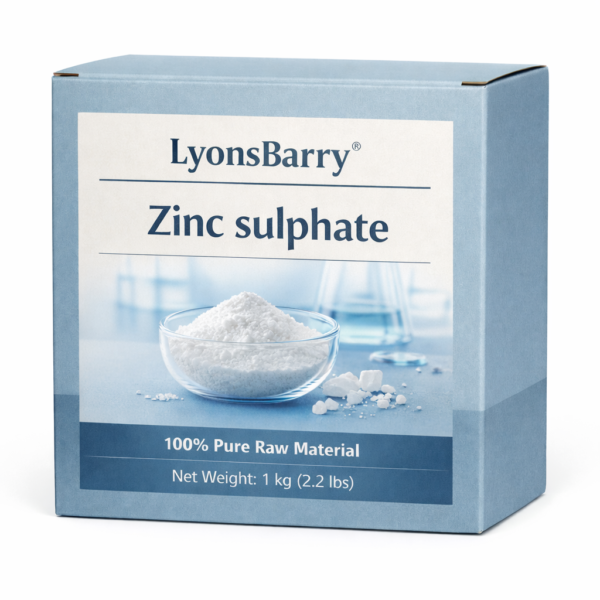
Zinc sulphate (OEM/ODM)
$0.01 Excluding tax & Custom ClearanceZinc Sulphate
Chemical / Technical Name:
Zinc Sulphate Monohydrate / Zinc Sulphate Heptahydrate
(ZnSO₄·H₂O / ZnSO₄·7H₂O)
Common / Alternative Names:
Zinc Sulfate, White Vitriol, Zinc Sulphate Hydrate
Category:
Essential trace mineral · Nutraceutical / Pharmaceutical ingredient
Raw Material Type:
Inorganic mineral salt (food, nutraceutical & pharmaceutical grade)
Key Active Constituents (Typical):
Zinc content (elemental):
Monohydrate: ≈ 35–36% ZnSO₄ (≈ 21–23% elemental Zn)
Heptahydrate: ≈ 99% ZnSO₄·7H₂O (≈ 22–23% elemental Zn)
(Assay compliant with USP / EP / IP / BP specifications)
Zinc carbonate (OEM/ODM)
$0.01 Excluding tax & Custom ClearanceZinc Sulphate
Chemical / Technical Name:
Zinc Sulphate Monohydrate / Zinc Sulphate Heptahydrate
(ZnSO₄·H₂O / ZnSO₄·7H₂O)
Common / Alternative Names:
Zinc Sulfate, White Vitriol, Zinc Sulphate Hydrate
Category:
Essential trace mineral · Nutraceutical / Pharmaceutical ingredient
Raw Material Type:
Inorganic mineral salt (food, nutraceutical & pharmaceutical grade)
Key Active Constituents (Typical):
Zinc content (elemental):
Monohydrate: ≈ 35–36% ZnSO₄ (≈ 21–23% elemental Zn)
Heptahydrate: ≈ 99% ZnSO₄·7H₂O (≈ 22–23% elemental Zn)
(Assay compliant with USP / EP / IP / BP specifications)
Zinc oxide (OEM/ODM)
$0.01 Excluding tax & Custom ClearanceZinc Oxide
Chemical / Technical Name:
Zinc Oxide (ZnO)
Common / Alternative Names:
Zinc Oxide, Flowers of Zinc, Calamine base (when blended)
Category:
Essential trace mineral · Inorganic compound · Nutraceutical / Pharmaceutical / Cosmetic ingredient
Raw Material Type:
Inorganic mineral compound (synthetic; food, pharmaceutical & cosmetic grade)
Key Active Constituents (Typical):
Zinc Oxide ≥ 99.0%
Elemental Zinc content: ≈ 80.0–80.5% Zn
(Assay compliant with USP / EP / IP / BP specifications)
Trisodium citrate (OEM/ODM)
$0.01 Excluding tax & Custom ClearanceTrisodium Citrate
Chemical / Technical Name:
Trisodium Citrate Dihydrate / Trisodium Citrate Anhydrous
(Sodium citrate; Na₃C₆H₅O₇·2H₂O / Na₃C₆H₅O₇)
Common / Alternative Names:
Sodium Citrate, Trisodium Citrate, Citric Acid Trisodium Salt
Category:
Buffering agent · Alkalizing agent · Excipient / Nutraceutical / Pharmaceutical ingredient
Raw Material Type:
Organic acid salt (synthetic or fermentation-derived; food, nutraceutical & pharmaceutical grade)
Key Active Constituents (Typical):
Trisodium Citrate content ≥ 99.0%
Sodium content (elemental): ≈ 23–24%
(Assay compliant with USP / EP / IP / BP specifications)
Zinc lactate (OEM/ODM)
$0.01 Excluding tax & Custom ClearanceZinc Lactate
Chemical / Technical Name:
Zinc Lactate Dihydrate
(Zinc 2-hydroxypropanoate; Zn(C₃H₅O₃)₂·2H₂O)
Common / Alternative Names:
Zinc Lactate, Lactic Acid Zinc Salt
Category:
Essential trace mineral · Organic zinc salt · Nutraceutical / Pharmaceutical ingredient
Raw Material Type:
Organic mineral salt (synthetic or fermentation-derived lactic acid; food, nutraceutical & pharmaceutical grade)
Key Active Constituents (Typical):
Zinc Lactate ≥ 98.0–102.0%
Elemental Zinc content: ≈ 22.0–23.0% Zn
(Assay compliant with USP / EP / IP / BP specifications)
Zinc gluconate (OEM/ODM)
$0.01 Excluding tax & Custom ClearanceZinc Gluconate
Chemical / Technical Name:
Zinc Gluconate
(Zinc D-gluconate; Zn(C₆H₁₁O₇)₂)
Common / Alternative Names:
Zinc Gluconate, Gluconic Acid Zinc Salt
Category:
Essential trace mineral · Organic zinc salt · Nutraceutical / Pharmaceutical ingredient
Raw Material Type:
Organic mineral salt (synthetic or fermentation-derived gluconic acid; food, nutraceutical & pharmaceutical grade)
Key Active Constituents (Typical):
Zinc Gluconate ≥ 97.0–102.0%
Elemental Zinc content: ≈ 13.0–14.5% Zn
(Assay compliant with USP / EP / IP / BP specifications)
Zinc citrate (OEM/ODM)
$0.01 Excluding tax & Custom ClearanceZinc Citrate
Chemical / Technical Name:
Zinc Citrate (Trihydrate)
(Zinc 2-hydroxy-1,2,3-propanetricarboxylate; Zn₃(C₆H₅O₇)₂·xH₂O)
Common / Alternative Names:
Zinc Citrate, Citric Acid Zinc Salt
Category:
Essential trace mineral · Organic zinc salt · Nutraceutical / Pharmaceutical ingredient
Raw Material Type:
Organic mineral salt (synthetic or fermentation-derived citric acid; food, nutraceutical & pharmaceutical grade)
Key Active Constituents (Typical):
Zinc Citrate ≥ 98.0–102.0%
Elemental Zinc content: ≈ 30.0–31.0% Zn
(Assay compliant with USP / EP / IP / BP specifications)
Zinc chloride (OEM/ODM)
$0.01 Excluding tax & Custom ClearanceZinc Chloride
Chemical / Technical Name:
Zinc Chloride
(ZnCl₂)
Common / Alternative Names:
Zinc Chloride, Butter of Zinc (historical), Zinc Dichloride
Category:
Essential trace mineral compound · Inorganic zinc salt · Pharmaceutical / Nutraceutical / Technical ingredient
Raw Material Type:
Inorganic mineral salt (synthetic; pharmaceutical, nutraceutical & technical grade)
Key Active Constituents (Typical):
Zinc Chloride ≥ 98.0–99.5%
Elemental Zinc content: ≈ 47.5–48.0% Zn
(Assay compliant with USP / EP / IP / BP specifications, where applicable)
Zinc acetate (OEM/ODM)
$0.01 Excluding tax & Custom ClearanceZinc Acetate
Chemical / Technical Name:
Zinc Acetate Dihydrate / Zinc Acetate Anhydrous
(Zinc ethanoate; Zn(CH₃COO)₂·2H₂O / Zn(CH₃COO)₂)
Common / Alternative Names:
Zinc Acetate, Acetic Acid Zinc Salt
Category:
Essential trace mineral · Organic zinc salt · Nutraceutical / Pharmaceutical ingredient
Raw Material Type:
Organic mineral salt (synthetic; pharmaceutical & nutraceutical grade)
Key Active Constituents (Typical):
Zinc Acetate ≥ 98.0–102.0%
Elemental Zinc content:
Dihydrate: ≈ 29.5–30.0% Zn
Anhydrous: ≈ 35.5–36.0% Zn
(Assay compliant with USP / EP / IP / BP specifications)
Sodium sulphate (OEM/ODM)
$0.01 Excluding tax & Custom ClearanceSodium Sulphate
Chemical / Technical Name:
Sodium Sulphate Anhydrous / Sodium Sulphate Decahydrate
(Na₂SO₄ / Na₂SO₄·10H₂O; Glauber’s Salt – decahydrate form)
Common / Alternative Names:
Sodium Sulfate, Glauber’s Salt (Decahydrate), Disodium Sulphate
Category:
Inorganic salt · Electrolyte · Excipient / Pharmaceutical / Nutraceutical ingredient
Raw Material Type:
Inorganic mineral salt (synthetic or naturally derived; pharmaceutical, nutraceutical & technical grade)
Key Active Constituents (Typical):
Sodium Sulphate ≥ 99.0–99.5%
Sodium content (elemental): ≈ 32.3% Na (anhydrous)
(Assay compliant with USP / EP / IP / BP specifications, where applicable)
Sodium phosphate dibasic (OEM/ODM)
Sodium Phosphate Dibasic
Chemical / Technical Name:
Sodium Phosphate Dibasic Anhydrous / Sodium Phosphate Dibasic Dihydrate
(Disodium hydrogen phosphate; Na₂HPO₄ / Na₂HPO₄·2H₂O)
Common / Alternative Names:
Disodium Phosphate, Dibasic Sodium Phosphate, Sodium Hydrogen Phosphate
Category:
Inorganic phosphate salt · Buffering agent · Electrolyte · Excipient / Nutraceutical / Pharmaceutical ingredient
Raw Material Type:
Inorganic mineral salt (synthetic; pharmaceutical, nutraceutical & food grade)
Key Active Constituents (Typical):
Sodium Phosphate Dibasic ≥ 98.0–102.0%
Phosphate content (as PO₄³⁻): grade-specific
Sodium content (elemental): grade-specific
(Assay compliant with USP / EP / IP / BP specifications)
Sodium dihydrogen phosphate (OEM/ODM)
$0.01 Excluding tax & Custom ClearanceSodium Dihydrogen Phosphate
Chemical / Technical Name:
Sodium Dihydrogen Phosphate Monohydrate / Sodium Dihydrogen Phosphate Anhydrous
(Monosodium phosphate; NaH₂PO₄·H₂O / NaH₂PO₄)
Common / Alternative Names:
Monosodium Phosphate, Sodium Biphosphate, Sodium Phosphate Monobasic
Category:
Inorganic phosphate salt · Acidifying agent · Buffering agent · Electrolyte · Excipient / Nutraceutical / Pharmaceutical ingredient
Raw Material Type:
Inorganic mineral salt (synthetic; pharmaceutical, nutraceutical & food grade)
Key Active Constituents (Typical):
Sodium Dihydrogen Phosphate ≥ 98.0–102.0%
Phosphate content (as PO₄³⁻): grade-specific
Sodium content (elemental): grade-specific
(Assay compliant with USP / EP / IP / BP specifications)
Sodium phosphate monobasic (OEM/ODM)
$0.01 Excluding tax & Custom ClearanceSodium Phosphate Monobasic
Chemical / Technical Name:
Sodium Phosphate Monobasic Monohydrate / Sodium Phosphate Monobasic Anhydrous
(Sodium dihydrogen phosphate; NaH₂PO₄·H₂O / NaH₂PO₄)
Common / Alternative Names:
Monosodium Phosphate, Sodium Dihydrogen Phosphate, Sodium Phosphate Monobasic
Category:
Inorganic phosphate salt · Acidifying agent · Buffering agent · Electrolyte · Excipient / Nutraceutical / Pharmaceutical ingredient
Raw Material Type:
Inorganic mineral salt (synthetic; pharmaceutical, nutraceutical & food grade)
Key Active Constituents (Typical):
Sodium Phosphate Monobasic ≥ 98.0–102.0%
Phosphate content (as PO₄³⁻): grade-specific
Sodium content (elemental): grade-specific
(Assay compliant with USP / EP / IP / BP specifications)
Sodium lactate (OEM/ODM)
$0.01 Excluding tax & Custom ClearanceSodium Lactate
Chemical / Technical Name:
Sodium Lactate Solution / Sodium Lactate
(Sodium 2-hydroxypropanoate; C₃H₅NaO₃)
Common / Alternative Names:
Sodium Lactate, Lactic Acid Sodium Salt
Category:
Electrolyte · Alkalizing agent · Buffering agent · Excipient / Nutraceutical / Pharmaceutical ingredient
Raw Material Type:
Organic acid salt (fermentation-derived lactic acid neutralized with sodium hydroxide; pharmaceutical, nutraceutical & food grade)
Key Active Constituents (Typical):
Sodium Lactate content: ≥ 60.0% w/w (solution grade)
Sodium content (elemental): ≈ 20.5–21.5% (on dry basis)
Lactic acid (as lactate): grade-specific
(Assay compliant with USP / EP / IP / BP specifications)
Sodium gluconate (OEM/ODM)
$0.01 Excluding tax & Custom ClearanceSodium Gluconate
Chemical / Technical Name:
Sodium D-Gluconate
Common / Alternative Names:
Gluconic Acid Sodium Salt, Sodium Gluconicum
Category:
Pharmaceutical & Nutraceutical Excipient / Chelating Agent / Mineral Source
Raw Material Type:
Chemically derived organic salt (fermentation-derived gluconic acid neutralized with sodium)
Key Active Constituents (Typical):
Sodium gluconate (C₆H₁₁NaO₇) ≥ 99.0%
Sodium content: ~12% w/w
Very low heavy metals; high chelation capacity for Ca²⁺, Mg²⁺, Fe³⁺
Sodium citrate (OEM/ODM)
$0.01 Excluding tax & Custom ClearanceSodium Citrate
Chemical / Technical Name:
Sodium Citrate (commonly Trisodium Citrate Dihydrate or Anhydrous)
Common / Alternative Names:
Trisodium Citrate, Sodium Citrate Dihydrate, Citric Acid Trisodium Salt
Category:
Pharmaceutical & Nutraceutical Excipient / Buffering Agent / Chelating Agent
Raw Material Type:
Chemically derived organic salt of citric acid
Key Active Constituents (Typical):
Trisodium citrate (C₆H₅Na₃O₇) ≥ 99.0%
Provides citrate ions with mild chelating and alkalizing properties
Low heavy metal content, high purity suitable for regulated applications
Sodium carbonate (OEM/ODM)
$0.01 Excluding tax & Custom ClearanceSodium Carbonate
Chemical / Technical Name:
Sodium Carbonate (Anhydrous / Monohydrate / Decahydrate)
Common / Alternative Names:
Soda Ash, Washing Soda, Disodium Carbonate
Category:
Pharmaceutical & Nutraceutical Excipient / Alkalizing Agent / pH Regulator
Raw Material Type:
Inorganic alkaline salt (synthetic or mineral-derived, grade dependent)
Key Active Constituents (Typical):
Sodium carbonate (Na₂CO₃) ≥ 99.0% (grade specific)
Provides carbonate ions with strong alkalinity
Low heavy metal content in pharmaceutical and food grades
Sodium bicarbonate (OEM/ODM)
$0.01 Excluding tax & Custom ClearanceSodium Bicarbonate
Chemical / Technical Name:
Sodium Hydrogen Carbonate
Common / Alternative Names:
Baking Soda, Sodium Acid Carbonate, Bicarbonate of Soda
Category:
Pharmaceutical & Nutraceutical Excipient / Alkalizing Agent / Buffer / Effervescent Base
Raw Material Type:
Inorganic alkaline salt
Key Active Constituents (Typical):
Sodium bicarbonate (NaHCO₃) ≥ 99.0% (grade dependent)
Provides bicarbonate ions with mild alkalizing and buffering action
Low heavy metal content in pharmaceutical and food grades
Selenious acid (OEM/ODM)
$0.01 Excluding tax & Custom ClearanceSelenious Acid
Chemical / Technical Name:
Selenious Acid
Common / Alternative Names:
Selenium(IV) Acid, Dihydrogen Selenite
Category:
Pharmaceutical & Nutraceutical Raw Material / Trace Element Source (Selenium)
Raw Material Type:
Inorganic selenium compound (oxidized selenium acid)
Key Active Constituents (Typical):
Selenious acid (H₂SeO₃) ≥ 98.0–99.5% (grade dependent)
Provides selenium in selenite form (Se⁴⁺)
Precisely controlled selenium content for trace mineral applications
Selenomethionine (OEM/ODM)
$0.01 Excluding tax & Custom ClearanceSelenomethionine
Chemical / Technical Name:
L-Selenomethionine
Common / Alternative Names:
Selenium Methionine, L-Methionine Selenium, Organic Selenium
Category:
Nutraceutical & Pharmaceutical Raw Material / Trace Element (Selenium Source)
Raw Material Type:
Organically bound selenium amino acid (methionine analogue)
Key Active Constituents (Typical):
L-Selenomethionine ≥ 98.0–99.5% (grade dependent)
Elemental selenium content: typically ~39–40% (w/w, calculated as Se)
Highly bioavailable organic selenium form
Sodium hydrogen selenite (OEM/ODM)
$0.01 Excluding tax & Custom ClearanceSodium Hydrogen Selenite
Chemical / Technical Name:
Sodium Hydrogen Selenite
(Monosodium Selenite)
Common / Alternative Names:
Sodium Selenite, Monosodium Selenite, Selenium(IV) Sodium Salt
Category:
Pharmaceutical & Nutraceutical Raw Material / Trace Element (Inorganic Selenium Source)
Raw Material Type:
Inorganic selenium salt (selenite form, Se⁴⁺)
Key Active Constituents (Typical):
Sodium hydrogen selenite (NaHSeO₃) ≥ 98.0–99.5% (grade dependent)
Elemental selenium content: approximately 45% w/w (calculated as Se)
Highly controlled impurity and heavy metal profile
Sodium selenite (OEM/ODM)
$0.01 Excluding tax & Custom ClearanceSodium Selenite
Chemical / Technical Name:
Sodium Selenite
(Disodium Selenite / Sodium Selenite Anhydrous)
Common / Alternative Names:
Disodium Selenite, Selenium(IV) Sodium Salt
Category:
Pharmaceutical & Nutraceutical Raw Material / Trace Element (Inorganic Selenium Source)
Raw Material Type:
Inorganic selenium salt (selenite form, Se⁴⁺)
Key Active Constituents (Typical):
Sodium selenite (Na₂SeO₃) ≥ 98.0–99.5% (grade dependent)
Elemental selenium content: approximately 45.6% w/w (as Se)
Precisely controlled impurity and heavy metal profile
Sodium selenate (OEM/ODM)
$0.01 Excluding tax & Custom ClearanceSodium Selenate
Chemical / Technical Name:
Sodium Selenate
(Disodium Selenate)
Common / Alternative Names:
Selenium(VI) Sodium Salt, Disodium Selenate
Category:
Pharmaceutical & Nutraceutical Raw Material / Trace Element (Inorganic Selenium Source)
Raw Material Type:
Inorganic selenium salt (selenate form, Se⁶⁺)
Key Active Constituents (Typical):
Sodium selenate (Na₂SeO₄) ≥ 98.0–99.5% (grade dependent)
Elemental selenium content: approximately 41.8% w/w (as Se)
Highly controlled levels of heavy metals and related impurities
Potassium dibasic phosphate (OEM/ODM)
$0.01 Excluding tax & Custom ClearancePotassium Dibasic Phosphate
Chemical / Technical Name:
Dipotassium Hydrogen Phosphate
(Potassium Phosphate Dibasic)
Common / Alternative Names:
Dipotassium Phosphate, Potassium Phosphate (Dibasic), K₂HPO₄
Category:
Pharmaceutical & Nutraceutical Excipient / Electrolyte / Buffering Agent / Mineral Source
Raw Material Type:
Inorganic phosphate salt
Key Active Constituents (Typical):
Dipotassium hydrogen phosphate (K₂HPO₄) ≥ 98.0–99.5% (grade dependent)
Provides potassium (K⁺) and phosphate (HPO₄²⁻) ions
Low heavy metal and impurity profile in pharma/food grades
Potassium monobasic phosphate (OEM/ODM)
$0.01 Excluding tax & Custom ClearancePotassium Monobasic Phosphate
Chemical / Technical Name:
Monopotassium Dihydrogen Phosphate
(Potassium Phosphate Monobasic)
Common / Alternative Names:
Monopotassium Phosphate, Potassium Dihydrogen Phosphate, KH₂PO₄
Category:
Pharmaceutical & Nutraceutical Excipient / Electrolyte / Buffering Agent / Mineral Source
Raw Material Type:
Inorganic phosphate salt
Key Active Constituents (Typical):
Monopotassium dihydrogen phosphate (KH₂PO₄) ≥ 98.0–99.5% (grade dependent)
Provides potassium (K⁺) and dihydrogen phosphate (H₂PO₄⁻) ions
Low heavy metal and impurity profile in pharmaceutical and food grades
Potassium carbonate (OEM/ODM)
$0.01 Excluding tax & Custom ClearancePotassium Carbonate
Chemical / Technical Name:
Potassium Carbonate
Common / Alternative Names:
Pearl Ash, Dipotassium Carbonate, Carbonate of Potash
Category:
Pharmaceutical & Nutraceutical Excipient / Alkalizing Agent / pH Regulator / Potassium Source
Raw Material Type:
Inorganic alkaline salt
Key Active Constituents (Typical):
Potassium carbonate (K₂CO₃) ≥ 98.0–99.5% (grade dependent)
Provides potassium (K⁺) and carbonate (CO₃²⁻) ions
Low heavy metal and impurity profile in pharmaceutical and food grades
Potassium gluconate (OEM/ODM)
$0.01 Excluding tax & Custom ClearancePotassium Gluconate
Chemical / Technical Name:
Potassium D-Gluconate
Common / Alternative Names:
Gluconic Acid Potassium Salt, Potassium Gluconicum
Category:
Pharmaceutical & Nutraceutical Raw Material / Mineral Source / Electrolyte
Raw Material Type:
Organic potassium salt (fermentation-derived gluconic acid neutralized with potassium)
Key Active Constituents (Typical):
Potassium gluconate (C₆H₁₁KO₇) ≥ 99.0% (grade dependent)
Elemental potassium content: approximately 16–17% w/w (as K)
Low heavy metal and impurity profile suitable for regulated applications
Potassium citrate (OEM/ODM)
$0.01 Excluding tax & Custom ClearancePotassium Citrate
Chemical / Technical Name:
Potassium Citrate
(Usually Tripotassium Citrate Monohydrate or Anhydrous)
Common / Alternative Names:
Tripotassium Citrate, Potassium Citrate Monohydrate, Citric Acid Tripotassium Salt
Category:
Pharmaceutical & Nutraceutical Raw Material / Electrolyte / Alkalizing & Buffering Agent
Raw Material Type:
Organic potassium salt of citric acid
Key Active Constituents (Typical):
Potassium citrate (K₃C₆H₅O₇) ≥ 98.0–99.5% (grade dependent)
Elemental potassium content: approximately 36–38% w/w (as K)
Provides citrate ions with alkalizing and mild chelating properties
Low heavy metal and impurity profile suitable for regulated applications
Potassium bicarbonate (OEM/ODM)
$0.01 Excluding tax & Custom ClearancePotassium Bicarbonate
Chemical / Technical Name:
Potassium Hydrogen Carbonate
Common / Alternative Names:
Potassium Acid Carbonate, Bicarbonate of Potash, KHCO₃
Category:
Pharmaceutical & Nutraceutical Excipient / Alkalizing Agent / Buffer / Potassium Source
Raw Material Type:
Inorganic alkaline salt
Key Active Constituents (Typical):
Potassium bicarbonate (KHCO₃) ≥ 98.0–99.5% (grade dependent)
Elemental potassium content: approximately 39% w/w (as K)
Provides bicarbonate ions with mild alkalizing and buffering properties
Low heavy metal and impurity profile in pharmaceutical and food grades
Potassium phosphate (OEM/ODM)
$0.01 Excluding tax & Custom ClearancePotassium Phosphate
Chemical / Technical Name:
Potassium Phosphate
(Available as Monobasic, Dibasic, or Tribasic grades)
Common / Alternative Names:
Potassium Phosphate Salts, Potassium Orthophosphate, Phosphate of Potash
Category:
Pharmaceutical & Nutraceutical Excipient / Electrolyte / Buffering Agent / Mineral Source
Raw Material Type:
Inorganic phosphate salts of potassium
Key Active Constituents (Typical):
Potassium phosphate salts (KH₂PO₄ / K₂HPO₄ / K₃PO₄ – grade dependent)
Provide potassium (K⁺) and phosphate (PO₄³⁻) ions
Low heavy metal and impurity profile in pharmaceutical and food grades
Potassium glycerophosphate (OEM/ODM)
$0.01 Excluding tax & Custom ClearancePotassium Glycerophosphate
Chemical / Technical Name:
Potassium Glycerophosphate
(Potassium Glycerol Phosphate)
Common / Alternative Names:
Potassium Glycerol Phosphate, Glycerophosphoric Acid Potassium Salt
Category:
Pharmaceutical & Nutraceutical Raw Material / Mineral Source / Electrolyte / Organic Phosphate
Raw Material Type:
Organic phosphate ester salt of glycerol
Key Active Constituents (Typical):
Potassium glycerophosphate ≥ 98.0–99.0% (grade dependent)
Provides potassium (K⁺) and organic phosphate in a highly bioavailable form
Lower gastric irritation potential compared to inorganic phosphate salts
Low heavy metal and impurity profile suitable for regulated applications
Sodium molybdate (OEM/ODM)
$0.01 Excluding tax & Custom ClearanceSodium Molybdate
Chemical / Technical Name:
Sodium Molybdate
(Commonly Sodium Molybdate Dihydrate)
Common / Alternative Names:
Disodium Molybdate, Molybdic Acid Sodium Salt
Category:
Pharmaceutical & Nutraceutical Raw Material / Trace Element (Molybdenum Source)
Raw Material Type:
Inorganic molybdenum salt (molybdate form, Mo⁶⁺)
Key Active Constituents (Typical):
Sodium molybdate (Na₂MoO₄·2H₂O or anhydrous) ≥ 98.0–99.5% (grade dependent)
Elemental molybdenum content: approx. 39–40% (anhydrous) or ~24% (dihydrate)
Highly controlled impurity and heavy metal profile
Ammonium molybdate (OEM/ODM)
$0.01 Excluding tax & Custom ClearanceAmmonium Molybdate
Chemical / Technical Name:
Ammonium Molybdate
(Commonly Ammonium Heptamolybdate Tetrahydrate)
Common / Alternative Names:
Ammonium Heptamolybdate, Molybdic Acid Ammonium Salt, AHM
Category:
Pharmaceutical & Nutraceutical Raw Material / Trace Element (Molybdenum Source)
Raw Material Type:
Inorganic molybdenum salt (molybdate form, Mo⁶⁺)
Key Active Constituents (Typical):
Ammonium heptamolybdate tetrahydrate
(NH4)6Mo7O24⋅4H2O ≥ 98.0–99.5% (grade dependent)
Elemental molybdenum content: approximately 54–56% (as Mo, anhydrous basis)
Highly controlled levels of heavy metals and related impurities
Magnanese gluconate (OEM/ODM)
$0.01 Excluding tax & Custom ClearanceManganese Gluconate
Chemical / Technical Name:
Manganese D-Gluconate
Common / Alternative Names:
Gluconic Acid Manganese Salt, Manganese Gluconicum
Category:
Pharmaceutical & Nutraceutical Raw Material / Trace Element (Manganese Source)
Raw Material Type:
Organic manganese salt (fermentation-derived gluconic acid neutralized with manganese)
Key Active Constituents (Typical):
Manganese gluconate ≥ 98.0–99.5% (grade dependent)
Elemental manganese content: approximately 12–14% w/w (as Mn)
Low heavy metal and impurity profile suitable for regulated applications
Magnanese sulphate (OEM/ODM)
$0.01 Excluding tax & Custom ClearanceManganese Sulphate
Chemical / Technical Name:
Manganese(II) Sulphate
(commonly Manganese Sulphate Monohydrate)
Common / Alternative Names:
Manganese Sulfate, Manganese(II) Sulphate Monohydrate, MnSO₄·H₂O
Category:
Pharmaceutical & Nutraceutical Raw Material / Trace Element (Manganese Source)
Raw Material Type:
Inorganic manganese salt
Key Active Constituents (Typical):
Manganese sulphate (MnSO₄·H₂O or anhydrous) ≥ 98.0–99.5% (grade dependent)
Elemental manganese content: approx. 32–33% (anhydrous) or ~31% (monohydrate)
Controlled levels of heavy metals and related impurities
Manganese citrate (OEM/ODM)
$0.01 Excluding tax & Custom ClearanceManganese Citrate
Chemical / Technical Name:
Manganese Citrate
(Usually Manganese(II) Citrate)
Common / Alternative Names:
Citric Acid Manganese Salt, Manganese Citrate Hydrate
Category:
Pharmaceutical & Nutraceutical Raw Material / Trace Element (Manganese Source)
Raw Material Type:
Organic manganese salt of citric acid
Key Active Constituents (Typical):
Manganese citrate ≥ 98.0–99.5% (grade dependent)
Elemental manganese content: approximately 12–16% w/w (as Mn) (hydrate dependent)
Low heavy metal and impurity profile suitable for regulated applications
Manganese carbonate (OEM/ODM)
$0.01 Excluding tax & Custom ClearanceManganese Carbonate
Chemical / Technical Name:
Manganese(II) Carbonate
Common / Alternative Names:
Carbonic Acid Manganese Salt, Manganous Carbonate, MnCO₃
Category:
Pharmaceutical & Nutraceutical Raw Material / Trace Element (Manganese Source)
Raw Material Type:
Inorganic manganese salt
Key Active Constituents (Typical):
Manganese carbonate (MnCO₃) ≥ 98.0–99.5% (grade dependent)
Elemental manganese content: approximately 47–48% w/w (as Mn)
Low heavy metal and impurity profile in pharmaceutical and food grades
Magnesium sulphate (OEM/ODM)
$0.01 Excluding tax & Custom ClearanceMagnesium Sulphate
Chemical / Technical Name:
Magnesium Sulphate
(commonly Magnesium Sulphate Heptahydrate)
Common / Alternative Names:
Epsom Salt, Magnesium Sulfate, MgSO₄·7H₂O
Category:
Pharmaceutical & Nutraceutical Raw Material / Electrolyte / Mineral Source
Raw Material Type:
Inorganic magnesium salt
Key Active Constituents (Typical):
Magnesium sulphate (MgSO₄·7H₂O or anhydrous) ≥ 98.0–99.5% (grade dependent)
Elemental magnesium content: approx. 9.8–10% (heptahydrate) or 20% (anhydrous)
Low heavy metal and impurity profile suitable for regulated applications