Raw Material

Sodium selenate
₹1.00 Including TaxSodium Selenate
Chemical / Technical Name:
Sodium Selenate
(Disodium Selenate)
Common / Alternative Names:
Selenium(VI) Sodium Salt, Disodium Selenate
Category:
Pharmaceutical & Nutraceutical Raw Material / Trace Element (Inorganic Selenium Source)
Raw Material Type:
Inorganic selenium salt (selenate form, Se⁶⁺)
Key Active Constituents (Typical):
Sodium selenate (Na₂SeO₄) ≥ 98.0–99.5% (grade dependent)
Elemental selenium content: approximately 41.8% w/w (as Se)
Highly controlled levels of heavy metals and related impurities
Potassium dibasic phosphate
₹1.00 Including TaxPotassium Dibasic Phosphate
Chemical / Technical Name:
Dipotassium Hydrogen Phosphate
(Potassium Phosphate Dibasic)
Common / Alternative Names:
Dipotassium Phosphate, Potassium Phosphate (Dibasic), K₂HPO₄
Category:
Pharmaceutical & Nutraceutical Excipient / Electrolyte / Buffering Agent / Mineral Source
Raw Material Type:
Inorganic phosphate salt
Key Active Constituents (Typical):
Dipotassium hydrogen phosphate (K₂HPO₄) ≥ 98.0–99.5% (grade dependent)
Provides potassium (K⁺) and phosphate (HPO₄²⁻) ions
Low heavy metal and impurity profile in pharma/food grades
Potassium monobasic phosphate
₹1.00 Including TaxPotassium Monobasic Phosphate
Chemical / Technical Name:
Monopotassium Dihydrogen Phosphate
(Potassium Phosphate Monobasic)
Common / Alternative Names:
Monopotassium Phosphate, Potassium Dihydrogen Phosphate, KH₂PO₄
Category:
Pharmaceutical & Nutraceutical Excipient / Electrolyte / Buffering Agent / Mineral Source
Raw Material Type:
Inorganic phosphate salt
Key Active Constituents (Typical):
Monopotassium dihydrogen phosphate (KH₂PO₄) ≥ 98.0–99.5% (grade dependent)
Provides potassium (K⁺) and dihydrogen phosphate (H₂PO₄⁻) ions
Low heavy metal and impurity profile in pharmaceutical and food grades
Potassium carbonate
₹1.00 Including TaxPotassium Carbonate
Chemical / Technical Name:
Potassium Carbonate
Common / Alternative Names:
Pearl Ash, Dipotassium Carbonate, Carbonate of Potash
Category:
Pharmaceutical & Nutraceutical Excipient / Alkalizing Agent / pH Regulator / Potassium Source
Raw Material Type:
Inorganic alkaline salt
Key Active Constituents (Typical):
Potassium carbonate (K₂CO₃) ≥ 98.0–99.5% (grade dependent)
Provides potassium (K⁺) and carbonate (CO₃²⁻) ions
Low heavy metal and impurity profile in pharmaceutical and food grades
Potassium gluconate
₹1.00 Including TaxPotassium Gluconate
Chemical / Technical Name:
Potassium D-Gluconate
Common / Alternative Names:
Gluconic Acid Potassium Salt, Potassium Gluconicum
Category:
Pharmaceutical & Nutraceutical Raw Material / Mineral Source / Electrolyte
Raw Material Type:
Organic potassium salt (fermentation-derived gluconic acid neutralized with potassium)
Key Active Constituents (Typical):
Potassium gluconate (C₆H₁₁KO₇) ≥ 99.0% (grade dependent)
Elemental potassium content: approximately 16–17% w/w (as K)
Low heavy metal and impurity profile suitable for regulated applications
Potassium citrate
₹1.00 Including TaxPotassium Citrate
Chemical / Technical Name:
Potassium Citrate
(Usually Tripotassium Citrate Monohydrate or Anhydrous)
Common / Alternative Names:
Tripotassium Citrate, Potassium Citrate Monohydrate, Citric Acid Tripotassium Salt
Category:
Pharmaceutical & Nutraceutical Raw Material / Electrolyte / Alkalizing & Buffering Agent
Raw Material Type:
Organic potassium salt of citric acid
Key Active Constituents (Typical):
Potassium citrate (K₃C₆H₅O₇) ≥ 98.0–99.5% (grade dependent)
Elemental potassium content: approximately 36–38% w/w (as K)
Provides citrate ions with alkalizing and mild chelating properties
Low heavy metal and impurity profile suitable for regulated applications
Potassium bicarbonate
₹1.00 Including TaxPotassium Bicarbonate
Chemical / Technical Name:
Potassium Hydrogen Carbonate
Common / Alternative Names:
Potassium Acid Carbonate, Bicarbonate of Potash, KHCO₃
Category:
Pharmaceutical & Nutraceutical Excipient / Alkalizing Agent / Buffer / Potassium Source
Raw Material Type:
Inorganic alkaline salt
Key Active Constituents (Typical):
Potassium bicarbonate (KHCO₃) ≥ 98.0–99.5% (grade dependent)
Elemental potassium content: approximately 39% w/w (as K)
Provides bicarbonate ions with mild alkalizing and buffering properties
Low heavy metal and impurity profile in pharmaceutical and food grades
Potassium phosphate
₹1.00 Including TaxPotassium Phosphate
Chemical / Technical Name:
Potassium Phosphate
(Available as Monobasic, Dibasic, or Tribasic grades)
Common / Alternative Names:
Potassium Phosphate Salts, Potassium Orthophosphate, Phosphate of Potash
Category:
Pharmaceutical & Nutraceutical Excipient / Electrolyte / Buffering Agent / Mineral Source
Raw Material Type:
Inorganic phosphate salts of potassium
Key Active Constituents (Typical):
Potassium phosphate salts (KH₂PO₄ / K₂HPO₄ / K₃PO₄ – grade dependent)
Provide potassium (K⁺) and phosphate (PO₄³⁻) ions
Low heavy metal and impurity profile in pharmaceutical and food grades

Potassium glycerophosphate
₹1.00 Including TaxPotassium Glycerophosphate
Chemical / Technical Name:
Potassium Glycerophosphate
(Potassium Glycerol Phosphate)
Common / Alternative Names:
Potassium Glycerol Phosphate, Glycerophosphoric Acid Potassium Salt
Category:
Pharmaceutical & Nutraceutical Raw Material / Mineral Source / Electrolyte / Organic Phosphate
Raw Material Type:
Organic phosphate ester salt of glycerol
Key Active Constituents (Typical):
Potassium glycerophosphate ≥ 98.0–99.0% (grade dependent)
Provides potassium (K⁺) and organic phosphate in a highly bioavailable form
Lower gastric irritation potential compared to inorganic phosphate salts
Low heavy metal and impurity profile suitable for regulated applications
Sodium molybdate
₹1.00 Including TaxSodium Molybdate
Chemical / Technical Name:
Sodium Molybdate
(Commonly Sodium Molybdate Dihydrate)
Common / Alternative Names:
Disodium Molybdate, Molybdic Acid Sodium Salt
Category:
Pharmaceutical & Nutraceutical Raw Material / Trace Element (Molybdenum Source)
Raw Material Type:
Inorganic molybdenum salt (molybdate form, Mo⁶⁺)
Key Active Constituents (Typical):
Sodium molybdate (Na₂MoO₄·2H₂O or anhydrous) ≥ 98.0–99.5% (grade dependent)
Elemental molybdenum content: approx. 39–40% (anhydrous) or ~24% (dihydrate)
Highly controlled impurity and heavy metal profile
Ammonium molybdate
₹1.00 Including TaxAmmonium Molybdate
Chemical / Technical Name:
Ammonium Molybdate
(Commonly Ammonium Heptamolybdate Tetrahydrate)
Common / Alternative Names:
Ammonium Heptamolybdate, Molybdic Acid Ammonium Salt, AHM
Category:
Pharmaceutical & Nutraceutical Raw Material / Trace Element (Molybdenum Source)
Raw Material Type:
Inorganic molybdenum salt (molybdate form, Mo⁶⁺)
Key Active Constituents (Typical):
Ammonium heptamolybdate tetrahydrate
(NH4)6Mo7O24⋅4H2O ≥ 98.0–99.5% (grade dependent)
Elemental molybdenum content: approximately 54–56% (as Mo, anhydrous basis)
Highly controlled levels of heavy metals and related impurities
Magnanese gluconate
₹1.00 Including TaxManganese Gluconate
Chemical / Technical Name:
Manganese D-Gluconate
Common / Alternative Names:
Gluconic Acid Manganese Salt, Manganese Gluconicum
Category:
Pharmaceutical & Nutraceutical Raw Material / Trace Element (Manganese Source)
Raw Material Type:
Organic manganese salt (fermentation-derived gluconic acid neutralized with manganese)
Key Active Constituents (Typical):
Manganese gluconate ≥ 98.0–99.5% (grade dependent)
Elemental manganese content: approximately 12–14% w/w (as Mn)
Low heavy metal and impurity profile suitable for regulated applications
Magnanese sulphate
₹1.00 Including TaxManganese Sulphate
Chemical / Technical Name:
Manganese(II) Sulphate
(commonly Manganese Sulphate Monohydrate)
Common / Alternative Names:
Manganese Sulfate, Manganese(II) Sulphate Monohydrate, MnSO₄·H₂O
Category:
Pharmaceutical & Nutraceutical Raw Material / Trace Element (Manganese Source)
Raw Material Type:
Inorganic manganese salt
Key Active Constituents (Typical):
Manganese sulphate (MnSO₄·H₂O or anhydrous) ≥ 98.0–99.5% (grade dependent)
Elemental manganese content: approx. 32–33% (anhydrous) or ~31% (monohydrate)
Controlled levels of heavy metals and related impurities
Manganese citrate
₹1.00 Including TaxManganese Citrate
Chemical / Technical Name:
Manganese Citrate
(Usually Manganese(II) Citrate)
Common / Alternative Names:
Citric Acid Manganese Salt, Manganese Citrate Hydrate
Category:
Pharmaceutical & Nutraceutical Raw Material / Trace Element (Manganese Source)
Raw Material Type:
Organic manganese salt of citric acid
Key Active Constituents (Typical):
Manganese citrate ≥ 98.0–99.5% (grade dependent)
Elemental manganese content: approximately 12–16% w/w (as Mn) (hydrate dependent)
Low heavy metal and impurity profile suitable for regulated applications
Manganese carbonate
₹1.00 Including TaxManganese Carbonate
Chemical / Technical Name:
Manganese(II) Carbonate
Common / Alternative Names:
Carbonic Acid Manganese Salt, Manganous Carbonate, MnCO₃
Category:
Pharmaceutical & Nutraceutical Raw Material / Trace Element (Manganese Source)
Raw Material Type:
Inorganic manganese salt
Key Active Constituents (Typical):
Manganese carbonate (MnCO₃) ≥ 98.0–99.5% (grade dependent)
Elemental manganese content: approximately 47–48% w/w (as Mn)
Low heavy metal and impurity profile in pharmaceutical and food grades
Magnesium sulphate
₹1.00 Including TaxMagnesium Sulphate
Chemical / Technical Name:
Magnesium Sulphate
(commonly Magnesium Sulphate Heptahydrate)
Common / Alternative Names:
Epsom Salt, Magnesium Sulfate, MgSO₄·7H₂O
Category:
Pharmaceutical & Nutraceutical Raw Material / Electrolyte / Mineral Source
Raw Material Type:
Inorganic magnesium salt
Key Active Constituents (Typical):
Magnesium sulphate (MgSO₄·7H₂O or anhydrous) ≥ 98.0–99.5% (grade dependent)
Elemental magnesium content: approx. 9.8–10% (heptahydrate) or 20% (anhydrous)
Low heavy metal and impurity profile suitable for regulated applications
Magnesium oxide
₹1.00 Including TaxMagnesium Oxide
Chemical / Technical Name:
Magnesium Oxide
Common / Alternative Names:
Light Magnesium Oxide, Heavy Magnesium Oxide, Magnesia, MgO
Category:
Pharmaceutical & Nutraceutical Raw Material / Mineral Source / Alkalizing Agent
Raw Material Type:
Inorganic magnesium compound (oxide form)
Key Active Constituents (Typical):
Magnesium oxide (MgO) ≥ 96.0–99.5% (grade dependent)
Elemental magnesium content: approximately 60% w/w (as Mg)
Low heavy metal and impurity profile in pharmaceutical and food grades
Magnesium phosphate tribasic
₹1.00 Including TaxMagnesium Phosphate Tribasic
Chemical / Technical Name:
Tribasic Magnesium Phosphate
(Magnesium Orthophosphate)
Common / Alternative Names:
Magnesium Phosphate, Tribasic; Magnesium Orthophosphate; Mg₃(PO₄)₂
Category:
Pharmaceutical & Nutraceutical Raw Material / Mineral Source / Buffering Agent
Raw Material Type:
Inorganic magnesium–phosphate salt
Key Active Constituents (Typical):
Magnesium phosphate tribasic (Mg₃(PO₄)₂) ≥ 98.0–99.5% (grade dependent)
Elemental magnesium content: approximately 27–28% w/w (as Mg)
Provides phosphate ions contributing to buffering capacity
Low heavy metal and impurity profile in pharmaceutical and food grades
Magnesium phosphate dibasic
₹1.00 Including TaxMagnesium Phosphate Dibasic
Chemical / Technical Name:
Magnesium Hydrogen Phosphate
(Dibasic Magnesium Phosphate)
Common / Alternative Names:
Magnesium Phosphate Dibasic, Magnesium Hydrogen Orthophosphate, MgHPO₄ (hydrate forms common)
Category:
Pharmaceutical & Nutraceutical Raw Material / Mineral Source / Buffering Agent
Raw Material Type:
Inorganic magnesium–phosphate salt
Key Active Constituents (Typical):
Magnesium hydrogen phosphate (MgHPO₄·xH₂O) ≥ 98.0–99.5% (grade dependent)
Elemental magnesium content: approximately 20–24% w/w (as Mg) (hydrate dependent)
Provides phosphate ions contributing to buffering capacity
Low heavy metal and impurity profile in pharmaceutical and food grades
Magnesium gluconate
₹1.00 Including TaxMagnesium Gluconate
Chemical / Technical Name:
Magnesium D-Gluconate
Common / Alternative Names:
Gluconic Acid Magnesium Salt, Magnesium Gluconicum
Category:
Pharmaceutical & Nutraceutical Raw Material / Mineral Source / Electrolyte
Raw Material Type:
Organic magnesium salt (fermentation-derived gluconic acid neutralized with magnesium)
Key Active Constituents (Typical):
Magnesium gluconate ≥ 98.0–99.5% (grade dependent)
Elemental magnesium content: approximately 5–6% w/w (as Mg)
Low heavy metal and impurity profile suitable for regulated applications
Magnesium carbonate
₹1.00 Including TaxMagnesium Carbonate
Chemical / Technical Name:
Magnesium Carbonate
Common / Alternative Names:
Basic Magnesium Carbonate, Light Magnesium Carbonate, Magnesia Alba, MgCO₃
Category:
Pharmaceutical & Nutraceutical Raw Material / Mineral Source / Alkalizing Agent
Raw Material Type:
Inorganic magnesium salt (carbonate form)
Key Active Constituents (Typical):
Magnesium carbonate (MgCO₃) ≥ 98.0–99.5% (grade dependent)
Elemental magnesium content: approximately 28–29% w/w (as Mg)
Low heavy metal and impurity profile in pharmaceutical and food grades
Magnesium aspartate
₹1.00 Including TaxMagnesium Aspartate
Chemical / Technical Name:
Magnesium Aspartate
(Magnesium Salt of L-Aspartic Acid)
Common / Alternative Names:
Magnesium L-Aspartate, Aspartic Acid Magnesium Salt
Category:
Pharmaceutical & Nutraceutical Raw Material / Mineral Source / Amino Acid Chelate
Raw Material Type:
Organic magnesium–amino acid complex (chelated mineral)
Key Active Constituents (Typical):
Magnesium aspartate ≥ 98.0–99.5% (grade dependent)
Elemental magnesium content: approximately 7–8% w/w (as Mg)
Derived from L-aspartic acid for enhanced bioavailability
Low heavy metal and impurity profile suitable for regulated applications
Electrolytic iron
₹1.00 Including TaxElectrolytic Iron
Chemical / Technical Name:
Electrolytic Iron
(Elemental Iron, Fe)
Common / Alternative Names:
Reduced Iron (Electrolytic Grade), Elemental Iron Powder
Category:
Pharmaceutical & Nutraceutical Raw Material / Mineral Source (Iron)
Raw Material Type:
Elemental iron obtained by electrolytic deposition
Key Active Constituents (Typical):
Elemental iron (Fe) ≥ 99.0% (grade dependent)
High purity iron with controlled particle size distribution
Very low levels of heavy metals and residual impurities
Ferrous sulphate
₹1.00 Including TaxFerrous Sulphate
Chemical / Technical Name:
Ferrous Sulphate
(commonly Ferrous Sulphate Heptahydrate / Monohydrate)
Common / Alternative Names:
Iron(II) Sulphate, Green Vitriol, FeSO₄·7H₂O / FeSO₄·H₂O
Category:
Pharmaceutical & Nutraceutical Raw Material / Mineral Source (Iron)
Raw Material Type:
Inorganic iron salt (ferrous, Fe²⁺ form)
Key Active Constituents (Typical):
Ferrous sulphate (hydrate dependent) ≥ 98.0–99.5%
Elemental iron content:
~20% w/w (monohydrate)
~12% w/w (heptahydrate)
Low heavy metal and impurity profile in pharmaceutical and food grades
Elemental iron
₹1.00 Including TaxElemental Iron
Chemical / Technical Name:
Iron
(Elemental Iron, Fe)
Common / Alternative Names:
Reduced Iron, Metallic Iron Powder, Iron Metal
Category:
Pharmaceutical & Nutraceutical Raw Material / Mineral Source (Iron)
Raw Material Type:
Elemental metal (iron), produced by reduction or electrolytic processes (grade dependent)
Key Active Constituents (Typical):
Elemental iron (Fe) ≥ 98.0–99.5% (grade dependent)
Very high elemental iron concentration
Controlled particle size distribution and low impurity profile in pharmaceutical and food grades
Ferrous sodium pyrophosphate
₹1.00 Including TaxFerrous Sodium Pyrophosphate
Chemical / Technical Name:
Ferrous Sodium Pyrophosphate
(also known as Sodium Ferric Pyrophosphate in food/pharma use)
Common / Alternative Names:
Sodium Iron Pyrophosphate, Ferric Sodium Pyrophosphate, Iron Pyrophosphate (Soluble)
Category:
Pharmaceutical & Nutraceutical Raw Material / Mineral Source (Iron)
Raw Material Type:
Inorganic iron–pyrophosphate complex (water-soluble iron salt)
Key Active Constituents (Typical):
Ferrous/Ferric sodium pyrophosphate ≥ 95.0–99.0% (grade dependent)
Elemental iron content: approximately 20–21% w/w (as Fe)
High purity with tightly controlled heavy metal profile
Carbonyl iron
₹1.00 Including TaxCarbonyl Iron
Chemical / Technical Name:
Carbonyl Iron
(Elemental Iron, Fe – carbonyl process)
Common / Alternative Names:
Iron Carbonyl Powder, Elemental Iron (Carbonyl Grade)
Category:
Pharmaceutical & Nutraceutical Raw Material / Mineral Source (Iron)
Raw Material Type:
Elemental iron produced by thermal decomposition of iron pentacarbonyl (high-purity carbonyl process)
Key Active Constituents (Typical):
Elemental iron (Fe) ≥ 98.5–99.9% (grade dependent)
Very fine, spherical particle size with high surface area
Extremely low levels of heavy metals and residual impurities
Sodium iron EDTA
₹1.00 Including TaxSodium Iron EDTA
Chemical / Technical Name:
Sodium Ferric Ethylenediaminetetraacetate
(Sodium Iron EDTA, NaFeEDTA)
Common / Alternative Names:
Ferric Sodium EDTA, Sodium Ferri EDTA, NaFeEDTA
Category:
Pharmaceutical & Nutraceutical Raw Material / Mineral Source (Iron Chelate)
Raw Material Type:
Chelated iron complex (ferric iron bound to EDTA)
Key Active Constituents (Typical):
Sodium iron EDTA ≥ 98.0–99.5% (grade dependent)
Elemental iron content: approximately 12–13% w/w (as Fe)
Iron present in a highly stable chelated form, resistant to dietary inhibitors
Low heavy metal and impurity profile suitable for regulated applications
Hydrogen reduced iron
₹1.00 Including TaxHydrogen Reduced Iron
Chemical / Technical Name:
Hydrogen Reduced Iron
(Elemental Iron, Fe – hydrogen reduction process)
Common / Alternative Names:
Reduced Iron (Hydrogen Grade), Ferrum Reductum, Elemental Iron Powder
Category:
Pharmaceutical & Nutraceutical Raw Material / Mineral Source (Iron)
Raw Material Type:
Elemental iron produced by reduction of iron oxides using hydrogen gas
Key Active Constituents (Typical):
Elemental iron (Fe) ≥ 98.0–99.5% (grade dependent)
High purity iron with controlled particle size and surface area
Very low levels of heavy metals and residual processing impurities
Ferrous bis glycinate
₹1.00 Including TaxFerrous Bisglycinate
Chemical / Technical Name:
Ferrous Bisglycinate Chelate
(Iron(II) Bisglycinate)
Common / Alternative Names:
Iron Bisglycinate, Ferrous Glycinate Chelate, Chelated Iron (Glycine)
Category:
Pharmaceutical & Nutraceutical Raw Material / Mineral Source (Chelated Iron)
Raw Material Type:
Amino acid–chelated iron complex (iron bound to two glycine molecules)
Key Active Constituents (Typical):
Ferrous bisglycinate ≥ 98.0–99.5% (grade dependent)
Elemental iron content: approximately 20% w/w (as Fe)
Iron present in a stable chelated form, protected from dietary inhibitors
Low heavy metal and impurity profile suitable for regulated applications
Ferric saccharate
₹1.00 Including TaxFerric Saccharate
Chemical / Technical Name:
Ferric Saccharate
(Iron(III) Saccharate Complex)
Common / Alternative Names:
Iron Saccharate, Ferric Saccharate Complex, Saccharated Iron
Category:
Pharmaceutical & Nutraceutical Raw Material / Mineral Source (Iron)
Raw Material Type:
Organic iron–carbohydrate complex (ferric iron bound with saccharide matrix)
Key Active Constituents (Typical):
Ferric saccharate complex ≥ 98.0% (grade dependent)
Elemental iron content: typically 8–12% w/w (as Fe) (formulation dependent)
Iron present in ferric (Fe³⁺) stabilized complex form
Low heavy metal and impurity profile suitable for regulated applications
Ferric di-phosphate
₹1.00 Including TaxFerric Di-phosphate
Chemical / Technical Name:
Ferric Diphosphate
(Iron(III) Diphosphate)
Common / Alternative Names:
Iron Diphosphate, Ferric Pyrophosphate (insoluble grade), Ferric Phosphate Diphosphate
Category:
Pharmaceutical & Nutraceutical Raw Material / Mineral Source (Iron)
Raw Material Type:
Inorganic iron–phosphate complex (ferric, Fe³⁺ form)
Key Active Constituents (Typical):
Ferric diphosphate ≥ 95.0–99.0% (grade dependent)
Elemental iron content: approximately 25–30% w/w (as Fe) (composition dependent)
Iron present in ferric (Fe³⁺) stabilized phosphate complex
Low heavy metal and impurity profile suitable for regulated applications
Ferrous lactate
₹1.00 Including TaxFerrous Lactate
Chemical / Technical Name:
Ferrous Lactate
(Iron(II) Lactate)
Common / Alternative Names:
Iron Lactate, Ferrous 2-Hydroxypropanoate
Category:
Pharmaceutical & Nutraceutical Raw Material / Mineral Source (Iron)
Raw Material Type:
Organic iron salt (ferrous iron bound to lactic acid)
Key Active Constituents (Typical):
Ferrous lactate ≥ 98.0–99.5% (grade dependent)
Elemental iron content: approximately 18–20% w/w (as Fe)
Iron present in ferrous (Fe²⁺) form for improved absorption
Low heavy metal and impurity profile suitable for regulated applications
Sodium iodate
₹1.00 Including TaxSodium Iodate
Chemical / Technical Name:
Sodium Iodate
Common / Alternative Names:
Iodic Acid Sodium Salt, NaIO₃
Category:
Pharmaceutical & Nutraceutical Raw Material / Trace Element (Iodine Source)
Raw Material Type:
Inorganic iodine salt (iodate form, I⁵⁺)
Key Active Constituents (Typical):
Sodium iodate (NaIO₃) ≥ 99.0–99.7% (grade dependent)
Elemental iodine content: approximately 59.3% w/w (as I)
Very low heavy metal and impurity profile in pharmaceutical and food grades
Potassium iodide
₹1.00 Including TaxPotassium Iodide
Chemical / Technical Name:
Potassium Iodide
Common / Alternative Names:
KI, Iodide of Potash
Category:
Pharmaceutical & Nutraceutical Raw Material / Trace Element (Iodine Source)
Raw Material Type:
Inorganic iodine salt (iodide form, I⁻)
Key Active Constituents (Typical):
Potassium iodide (KI) ≥ 99.0–99.7% (grade dependent)
Elemental iodine content: approximately 76.4% w/w (as I)
Low heavy metal and impurity profile suitable for regulated applications
Ferrous orthophosphate
₹1.00 Including TaxFerrous Orthophosphate
Chemical / Technical Name:
Ferrous Orthophosphate
(Iron(II) Phosphate)
Common / Alternative Names:
Ferrous Phosphate, Iron(II) Orthophosphate
Category:
Pharmaceutical & Nutraceutical Raw Material / Mineral Source (Iron)
Raw Material Type:
Inorganic iron–phosphate salt (ferrous, Fe²⁺ form)
Key Active Constituents (Typical):
Ferrous orthophosphate ≥ 95.0–99.0% (grade dependent)
Elemental iron content: approximately 30–32% w/w (as Fe)
Iron present in ferrous (Fe²⁺) form, suitable for hematinic use
Low heavy metal and impurity profile in pharmaceutical and food grades
Potassium iodate
₹1.00 Including TaxPotassium Iodate
Chemical / Technical Name:
Potassium Iodate
Common / Alternative Names:
Iodic Acid Potassium Salt, KIO₃
Category:
Pharmaceutical & Nutraceutical Raw Material / Trace Element (Iodine Source)
Raw Material Type:
Inorganic iodine salt (iodate form, I⁵⁺)
Key Active Constituents (Typical):
Potassium iodate (KIO₃) ≥ 99.0–99.7% (grade dependent)
Elemental iodine content: approximately 59.5% w/w (as I)
Very low heavy metal and impurity profile in pharmaceutical and food grades
Ferrous succinate
₹1.00 Including TaxFerrous Succinate
Chemical / Technical Name:
Ferrous Succinate
(Iron(II) Succinate)
Common / Alternative Names:
Iron Succinate, Ferrous Butanedioate
Category:
Pharmaceutical & Nutraceutical Raw Material / Mineral Source (Iron)
Raw Material Type:
Organic iron salt (ferrous iron complexed with succinic acid)
Key Active Constituents (Typical):
Ferrous succinate ≥ 98.0–99.5% (grade dependent)
Elemental iron content: approximately 22–24% w/w (as Fe)
Iron present in ferrous (Fe²⁺) form for improved absorption
Low heavy metal and impurity profile suitable for regulated applications
Ferric ammonium citrate
₹1.00 Including TaxFerric Ammonium Citrate
Chemical / Technical Name:
Ferric Ammonium Citrate
(Iron(III) Ammonium Citrate)
Common / Alternative Names:
Ammonium Ferric Citrate, Iron Ammonium Citrate, Ferric Citrate Ammonium Salt
Category:
Pharmaceutical & Nutraceutical Raw Material / Mineral Source (Iron)
Raw Material Type:
Organic iron–citrate complex (ferric iron coordinated with citric acid and ammonium ions)
Key Active Constituents (Typical):
Ferric ammonium citrate ≥ 98.0–99.0% (grade dependent)
Elemental iron content: typically 14–18% w/w (as Fe) (brown or green grade dependent)
Iron present in ferric (Fe³⁺) complexed form
Low heavy metal and impurity profile suitable for regulated applications
Ferrous gluconate
₹1.00 Including TaxFerrous Gluconate
Chemical / Technical Name:
Ferrous Gluconate
(Iron(II) D-Gluconate)
Common / Alternative Names:
Iron Gluconate, Ferrous D-Gluconate
Category:
Pharmaceutical & Nutraceutical Raw Material / Mineral Source (Iron)
Raw Material Type:
Organic iron salt (ferrous iron complexed with gluconic acid)
Key Active Constituents (Typical):
Ferrous gluconate ≥ 98.0–99.5% (grade dependent)
Elemental iron content: approximately 11–12% w/w (as Fe)
Iron present in ferrous (Fe²⁺) form for enhanced absorption
Low heavy metal and impurity profile suitable for regulated applications

Ferrous fumarate
₹1.00 Including TaxFerrous Fumarate
Chemical / Technical Name:
Ferrous Fumarate
(Iron(II) Fumarate)
Common / Alternative Names:
Iron Fumarate, Ferrous trans-Butenedioate
Category:
Pharmaceutical & Nutraceutical Raw Material / Mineral Source (Iron)
Raw Material Type:
Organic iron salt (ferrous iron complexed with fumaric acid)
Key Active Constituents (Typical):
Ferrous fumarate ≥ 98.0–99.5% (grade dependent)
Elemental iron content: approximately 32–33% w/w (as Fe)
Iron present in ferrous (Fe²⁺) form for high bioavailability
Low heavy metal and impurity profile suitable for regulated applications
Ferric sodium di-phosphate
₹1.00 Including TaxFerric Sodium Di-phosphate
Chemical / Technical Name:
Ferric Sodium Diphosphate
(Sodium Ferric Diphosphate)
Common / Alternative Names:
Sodium Ferric Diphosphate, Ferric Sodium Pyrophosphate (diphosphate grade), Iron(III) Sodium Diphosphate
Category:
Pharmaceutical & Nutraceutical Raw Material / Mineral Source (Iron)
Raw Material Type:
Inorganic iron–phosphate complex (ferric, Fe³⁺ form, sodium salt)
Key Active Constituents (Typical):
Ferric sodium diphosphate ≥ 95.0–99.0% (grade dependent)
Elemental iron content: approximately 18–22% w/w (as Fe) (composition/grade dependent)
Iron present in ferric (Fe³⁺) stabilized diphosphate complex
Low heavy metal and impurity profile suitable for regulated applications
Cupric gluconate
₹1.00 Including TaxCupric Gluconate
Chemical / Technical Name:
Cupric D-Gluconate
(Copper(II) Gluconate)
Common / Alternative Names:
Copper Gluconate, Gluconic Acid Copper Salt
Category:
Pharmaceutical & Nutraceutical Raw Material / Trace Element (Copper Source)
Raw Material Type:
Organic copper salt (fermentation-derived gluconic acid neutralized with cupric copper)
Key Active Constituents (Typical):
Cupric gluconate ≥ 98.0–99.5% (grade dependent)
Elemental copper content: approximately 13–14% w/w (as Cu)
Low heavy metal and impurity profile suitable for regulated applications
Cupric citrate
₹1.00 Including TaxCupric Citrate
Chemical / Technical Name:
Cupric Citrate
(Copper(II) Citrate)
Common / Alternative Names:
Copper Citrate, Citric Acid Copper Salt
Category:
Pharmaceutical & Nutraceutical Raw Material / Trace Element (Copper Source)
Raw Material Type:
Organic copper salt of citric acid
Key Active Constituents (Typical):
Cupric citrate ≥ 98.0–99.5% (grade dependent)
Elemental copper content: approximately 20–23% w/w (as Cu) (hydrate dependent)
Low heavy metal and impurity profile suitable for regulated applications
Ferrous citrate
₹1.00 Including TaxFerrous Citrate
Chemical / Technical Name:
Ferrous Citrate
(Iron(II) Citrate)
Common / Alternative Names:
Iron Citrate, Ferrous Citric Acid Salt
Category:
Pharmaceutical & Nutraceutical Raw Material / Mineral Source (Iron)
Raw Material Type:
Organic iron salt (ferrous iron complexed with citric acid)
Key Active Constituents (Typical):
Ferrous citrate ≥ 98.0–99.5% (grade dependent)
Elemental iron content: approximately 20–25% w/w (as Fe) (hydrate and complex ratio dependent)
Iron present in ferrous (Fe²⁺) form for enhanced bioavailability
Low heavy metal and impurity profile suitable for regulated applications
Cupric carbonate
₹1.00 Including TaxCupric Carbonate
Chemical / Technical Name:
Cupric Carbonate
(commonly Basic Copper Carbonate)
Common / Alternative Names:
Copper(II) Carbonate, Basic Copper Carbonate, Malachite (synthetic grade)
Category:
Pharmaceutical & Nutraceutical Raw Material / Trace Element (Copper Source)
Raw Material Type:
Inorganic copper salt (carbonate/basic carbonate form)
Key Active Constituents (Typical):
Cupric carbonate (CuCO₃·Cu(OH)₂ – basic form, composition dependent) ≥ 95.0–99.0%
Elemental copper content: approximately 55–57% w/w (as Cu) (basic carbonate basis)
Controlled impurity and heavy metal profile suitable for regulated applications
Chromium (III) sulphate
₹1.00 Including TaxChromium (III) Sulphate
Chemical / Technical Name:
Chromium(III) Sulphate
(commonly Chromium(III) Sulphate Basic or Hydrated)
Common / Alternative Names:
Chromic Sulphate, Chromium Sulfate, Cr₂(SO₄)₃·xH₂O
Category:
Pharmaceutical & Nutraceutical Raw Material / Trace Element (Chromium Source)
Raw Material Type:
Inorganic chromium salt (trivalent chromium, Cr³⁺)
Key Active Constituents (Typical):
Chromium(III) sulphate ≥ 98.0–99.5% (grade dependent)
Elemental chromium content: approximately 10–13% w/w (as Cr) (hydrate/basicity dependent)
Controlled impurity and heavy metal profile suitable for regulated applications
Chromium (III) chloride
₹1.00 Including TaxChromium (III) Chloride
Chemical / Technical Name:
Chromium(III) Chloride
(commonly Chromium(III) Chloride Hexahydrate)
Common / Alternative Names:
Chromic Chloride, Chromium Chloride, CrCl₃·6H₂O
Category:
Pharmaceutical & Nutraceutical Raw Material / Trace Element (Chromium Source)
Raw Material Type:
Inorganic chromium salt (trivalent chromium, Cr³⁺)
Key Active Constituents (Typical):
Chromium(III) chloride (anhydrous or hexahydrate) ≥ 98.0–99.5% (grade dependent)
Elemental chromium content: approximately 19–20% w/w (anhydrous) or ~12–13% w/w (hexahydrate)
Chromium present exclusively in trivalent (Cr³⁺) form, the biologically relevant and permitted form
Controlled heavy metal and impurity profile
Sodium chloride
₹1.00 Including TaxSodium Chloride
Chemical / Technical Name:
Sodium Chloride
Common / Alternative Names:
Common Salt, Table Salt, NaCl
Category:
Pharmaceutical & Nutraceutical Raw Material / Electrolyte / Mineral Source
Raw Material Type:
Inorganic mineral salt
Key Active Constituents (Typical):
Sodium chloride (NaCl) ≥ 99.0–99.9% (grade dependent)
Provides sodium (Na⁺) and chloride (Cl⁻) ions
Very low heavy metals and impurity profile in pharmaceutical and food grades

Sodium iodide
₹1.00 Including TaxSodium Iodide
Chemical / Technical Name:
Sodium Iodide
Common / Alternative Names:
Iodide of Sodium, NaI
Category:
Pharmaceutical & Nutraceutical Raw Material / Trace Element (Iodine Source)
Raw Material Type:
Inorganic iodine salt (iodide form, I⁻)
Key Active Constituents (Typical):
Sodium iodide (NaI) ≥ 99.0–99.7% (grade dependent)
Elemental iodine content: approximately 84.6% w/w (as I)
Very low heavy metal and impurity profile in pharmaceutical and food grades
Copper lysine complex
₹1.00 Including TaxCopper Lysine Complex
Chemical / Technical Name:
Copper–Lysine Complex
(Copper Lysinate / Copper L-Lysine Chelate)
Common / Alternative Names:
Copper Lysinate, Copper L-Lysine Chelate, Copper Amino Acid Chelate (Lysine)
Category:
Pharmaceutical & Nutraceutical Raw Material / Trace Element (Copper Source)
Raw Material Type:
Organic amino acid–chelated copper complex (copper bound to L-lysine)
Key Active Constituents (Typical):
Copper lysine complex ≥ 98.0–99.5% (grade dependent)
Elemental copper content: approximately 10–15% w/w (as Cu) (chelation ratio dependent)
Copper present in a stable amino acid chelated form
Low heavy metal and impurity profile suitable for regulated applications
Cupric sulphate
₹1.00 Including TaxCupric Sulphate
Chemical / Technical Name:
Cupric Sulphate
(commonly Cupric Sulphate Pentahydrate)
Common / Alternative Names:
Copper(II) Sulphate, Copper Sulfate, Blue Vitriol, CuSO₄·5H₂O
Category:
Pharmaceutical & Nutraceutical Raw Material / Trace Element (Copper Source)
Raw Material Type:
Inorganic copper salt (cupric, Cu²⁺ form)
Key Active Constituents (Typical):
Cupric sulphate (CuSO₄·5H₂O or anhydrous) ≥ 98.0–99.5% (grade dependent)
Elemental copper content: approximately 25.4% w/w (anhydrous) or ~25% w/w (pentahydrate)
Controlled heavy metal and impurity profile suitable for regulated applications
Potassium chloride
₹1.00 Including TaxPotassium Chloride
Chemical / Technical Name:
Potassium Chloride
Common / Alternative Names:
Muriate of Potash, KCl
Category:
Pharmaceutical & Nutraceutical Raw Material / Electrolyte / Mineral Source
Raw Material Type:
Inorganic mineral salt
Key Active Constituents (Typical):
Potassium chloride (KCl) ≥ 99.0–99.9% (grade dependent)
Provides potassium (K⁺) and chloride (Cl⁻) ions
Very low heavy metal and impurity profile in pharmaceutical and food grades
Manganese chloride
₹1.00 Including TaxManganese Chloride
Chemical / Technical Name:
Manganese(II) Chloride
(commonly Manganese Chloride Tetrahydrate)
Common / Alternative Names:
Manganous Chloride, MnCl₂·4H₂O
Category:
Pharmaceutical & Nutraceutical Raw Material / Trace Element (Manganese Source)
Raw Material Type:
Inorganic manganese salt (divalent manganese, Mn²⁺)
Key Active Constituents (Typical):
Manganese chloride (anhydrous or tetrahydrate) ≥ 98.0–99.5% (grade dependent)
Elemental manganese content: approximately 44% w/w (anhydrous) or ~28% w/w (tetrahydrate)
Low heavy metal and impurity profile suitable for regulated applications
Magnesium chloride
₹1.00 Including TaxMagnesium Chloride
Chemical / Technical Name:
Magnesium Chloride
(commonly Magnesium Chloride Hexahydrate)
Common / Alternative Names:
Magnesium Chloride Hexahydrate, MgCl₂·6H₂O
Category:
Pharmaceutical & Nutraceutical Raw Material / Electrolyte / Mineral Source
Raw Material Type:
Inorganic magnesium salt (chloride form)
Key Active Constituents (Typical):
Magnesium chloride (anhydrous or hexahydrate) ≥ 98.0–99.5% (grade dependent)
Elemental magnesium content: approximately 25.5% w/w (anhydrous) or ~12% w/w (hexahydrate)
Low heavy metal and impurity profile in pharmaceutical and food grades
Choline chloride
₹1.00 Including TaxCholine Chloride
Chemical / Technical Name:
Choline Chloride
Common / Alternative Names:
Vitamin B4 (nutritional designation), Choline HCl substitute (non-acidic), (2-Hydroxyethyl)trimethylammonium Chloride
Category:
Pharmaceutical & Nutraceutical Raw Material / Vitamin-like Nutrient / Electrolyte
Raw Material Type:
Quaternary ammonium salt (synthetic, food/pharma grade)
Key Active Constituents (Typical):
Choline chloride ≥ 98.0–99.5% (grade dependent)
Choline content: approximately 60–65% w/w (as choline)
Very low heavy metals and residual solvents

Calcium lactate
₹1.00 Including TaxCalcium Lactate
Chemical / Technical Name:
Calcium Lactate
(commonly Calcium Lactate Pentahydrate)
Common / Alternative Names:
Calcium 2-Hydroxypropanoate, Lactic Acid Calcium Salt
Category:
Pharmaceutical & Nutraceutical Raw Material / Mineral Source (Calcium)
Raw Material Type:
Organic calcium salt (derived from lactic acid neutralized with calcium)
Key Active Constituents (Typical):
Calcium lactate (Ca(C₃H₅O₃)₂·xH₂O) ≥ 98.0–99.5% (grade dependent)
Elemental calcium content: approximately 13% w/w (pentahydrate)
Low heavy metal and impurity profile suitable for regulated applications
Algus calcarius
₹1.00 Including TaxAlgus Calcarius
Chemical / Technical Name:
Calcified Red Algae
(commonly Lithothamnion calcareum)
Common / Alternative Names:
Algae Calcium, Marine Algae Calcium, Red Algae Mineral Complex
Category:
Pharmaceutical & Nutraceutical Raw Material / Natural Mineral Source (Calcium–Magnesium)
Raw Material Type:
Marine botanical (calcified red algae)
Key Active Constituents (Typical):
Elemental Calcium: 30–34% w/w (as Ca)
Elemental Magnesium: 2–4% w/w (as Mg)
Natural trace minerals: boron, silica, zinc, manganese, iron (ppm range)
Calcium present mainly as calcium carbonate in a porous, bioactive matrix
Calcium sulphate
₹1.00 Including TaxCalcium Sulphate
Chemical / Technical Name:
Calcium Sulphate
(commonly Calcium Sulphate Dihydrate / Anhydrous)
Common / Alternative Names:
Calcium Sulfate, Gypsum (CaSO₄·2H₂O), Anhydrite (CaSO₄)
Category:
Pharmaceutical & Nutraceutical Raw Material / Mineral Source / Excipient
Raw Material Type:
Inorganic calcium salt
Key Active Constituents (Typical):
Calcium sulphate (CaSO₄·xH₂O) ≥ 98.0–99.5% (grade dependent)
Elemental calcium content: approximately 23% w/w (anhydrous) or ~17% w/w (dihydrate)
Low heavy metal and impurity profile in pharmaceutical and food grades
Calcium phosphate
₹1.00 Including TaxCalcium Phosphate
Chemical / Technical Name:
Calcium Phosphate
(available as Monocalcium Phosphate, Dicalcium Phosphate, or Tricalcium Phosphate)
Common / Alternative Names:
Calcium Orthophosphate, Dicalcium Phosphate (DCP), Tricalcium Phosphate (TCP)
Category:
Pharmaceutical & Nutraceutical Raw Material / Mineral Source (Calcium & Phosphorus) / Excipient
Raw Material Type:
Inorganic calcium–phosphate salts
Key Active Constituents (Typical):
Dicalcium Phosphate (CaHPO₄ / CaHPO₄·2H₂O):
Elemental calcium ~23% (anhydrous) or ~18% (dihydrate)
Tricalcium Phosphate (Ca₃(PO₄)₂):
Elemental calcium ~38–39%
Low heavy metal and impurity profile in pharmaceutical and food grades
Sodium-D-pantothenate
₹1.00 Including TaxSodium-D-Pantothenate
Chemical / Technical Name:
Sodium-D-Pantothenate
(Sodium salt of D-Pantothenic Acid)
Common / Alternative Names:
Sodium Pantothenate, Vitamin B5 Sodium Salt
Category:
Pharmaceutical & Nutraceutical Raw Material / Vitamin (Vitamin B5)
Raw Material Type:
Water-soluble vitamin salt (synthetic, bioidentical to natural vitamin B5)
Key Active Constituents (Typical):
Sodium-D-pantothenate ≥ 98.0–101.0% (grade dependent, on dry basis)
Pantothenic acid activity expressed as vitamin B5
Low heavy metal and residual solvent profile suitable for regulated applications
Calcium oxide
₹1.00 Including TaxCalcium Oxide
Chemical / Technical Name:
Calcium Oxide
Common / Alternative Names:
Quicklime, Burnt Lime, CaO
Category:
Pharmaceutical & Nutraceutical Raw Material / Mineral Source / Alkalizing Agent
Raw Material Type:
Inorganic calcium compound (oxide form)
Key Active Constituents (Typical):
Calcium oxide (CaO) ≥ 95.0–99.0% (grade dependent)
Elemental calcium content: approximately 71–72% w/w (as Ca)
Controlled levels of heavy metals and insoluble impurities in pharma/food grades

Calcium hydroxide
₹1.00 Including TaxCalcium Hydroxide
Chemical / Technical Name:
Calcium Hydroxide
Common / Alternative Names:
Slaked Lime, Hydrated Lime, Ca(OH)₂
Category:
Pharmaceutical & Nutraceutical Raw Material / Mineral Source / Alkalizing & pH-Regulating Agent
Raw Material Type:
Inorganic calcium compound (hydroxide form)
Key Active Constituents (Typical):
Calcium hydroxide (Ca(OH)₂) ≥ 95.0–99.0% (grade dependent)
Elemental calcium content: approximately 54% w/w (as Ca)
Low heavy metal and impurity profile in pharmaceutical and food grades
Calcium orthophosphate
₹1.00 Including TaxCalcium Orthophosphate
Chemical / Technical Name:
Calcium Orthophosphate
(generic term covering calcium salts of orthophosphoric acid)
Common / Alternative Names:
Calcium Phosphate (Orthophosphate), Tricalcium Phosphate (TCP), Dicalcium Phosphate (DCP) — orthophosphate forms
Category:
Pharmaceutical & Nutraceutical Raw Material / Mineral Source (Calcium & Phosphorus) / Excipient
Raw Material Type:
Inorganic calcium–phosphate salt (orthophosphate group, PO₄³⁻)
Key Active Constituents (Typical):
Tricalcium Orthophosphate (Ca₃(PO₄)₂):
Elemental calcium ~38–39% w/w; phosphorus ~18–20%
Dicalcium Orthophosphate (CaHPO₄ / CaHPO₄·2H₂O):
Elemental calcium ~23% (anhydrous) or ~18% (dihydrate)
Low heavy metal and impurity profile in pharmaceutical and food grades

Calcium glycerophosphate
₹1.00 Including TaxCalcium Glycerophosphate
Chemical / Technical Name:
Calcium Glycerophosphate
(Calcium Glycerol Phosphate)
Common / Alternative Names:
Calcium Glycerol Phosphate, Glycerophosphoric Acid Calcium Salt
Category:
Pharmaceutical & Nutraceutical Raw Material / Mineral Source (Calcium & Phosphorus) / Organic Phosphate
Raw Material Type:
Organic calcium–phosphate ester (calcium salt of glycerophosphoric acid)
Key Active Constituents (Typical):
Calcium glycerophosphate ≥ 98.0–99.0% (grade dependent)
Elemental calcium content: approximately 17–19% w/w (as Ca)
Elemental phosphorus content: approximately 13–14% w/w (as P)
Low heavy metal and impurity profile suitable for regulated applications
Calcium gluconate
₹1.00 Including TaxCalcium Gluconate
Chemical / Technical Name:
Calcium D-Gluconate
Common / Alternative Names:
Gluconic Acid Calcium Salt, Calcium Gluconicum
Category:
Pharmaceutical & Nutraceutical Raw Material / Mineral Source (Calcium)
Raw Material Type:
Organic calcium salt (gluconic acid–based)
Key Active Constituents (Typical):
Calcium gluconate ≥ 98.0–99.5% (grade dependent)
Elemental calcium content: approximately 9–10% w/w (as Ca)
Low heavy metal and impurity profile suitable for regulated applications
Calcium salts of citric acid
₹1.00 Including TaxCalcium Salts of Citric Acid
Chemical / Technical Name:
Calcium Citrate
(includes Calcium Citrate, Calcium Citrate Malate – CCM)
Common / Alternative Names:
Calcium Citrate, Tricalcium Dicitrate, Calcium Citrate Malate (CCM)
Category:
Pharmaceutical & Nutraceutical Raw Material / Mineral Source (Calcium)
Raw Material Type:
Organic calcium salt derived from citric acid
Key Active Constituents (Typical):
Calcium citrate: Elemental calcium ~21% w/w
Calcium citrate malate (CCM): Elemental calcium ~24% w/w
Low heavy metal and impurity profile suitable for regulated applications
Calcium chloride
₹1.00 Including TaxCalcium Chloride
Chemical / Technical Name:
Calcium Chloride
(commonly Calcium Chloride Dihydrate or Anhydrous)
Common / Alternative Names:
Calcium Chloride Dihydrate, CaCl₂·2H₂O; Anhydrous Calcium Chloride, CaCl₂
Category:
Pharmaceutical & Nutraceutical Raw Material / Electrolyte / Mineral Source (Calcium)
Raw Material Type:
Inorganic calcium salt (chloride form)
Key Active Constituents (Typical):
Calcium chloride (CaCl₂·xH₂O) ≥ 98.0–99.5% (grade dependent)
Elemental calcium content: approximately 36% w/w (anhydrous) or ~27% w/w (dihydrate)
Low heavy metal and impurity profile in pharmaceutical and food grades
Calcium carbonate
₹1.00 Including TaxCalcium Carbonate
Chemical / Technical Name:
Calcium Carbonate
Common / Alternative Names:
Precipitated Calcium Carbonate (PCC), Ground Calcium Carbonate (GCC), Limestone Calcium, CaCO₃
Category:
Pharmaceutical & Nutraceutical Raw Material / Mineral Source (Calcium) / Antacid & Excipient
Raw Material Type:
Inorganic calcium salt (carbonate form)
Key Active Constituents (Typical):
Calcium carbonate (CaCO₃) ≥ 98.0–99.5% (grade dependent)
Elemental calcium content: approximately 40% w/w (as Ca)
Low heavy metal and impurity profile in pharmaceutical and food grades
Menatetrenone
₹1.00 Including TaxMenatetrenone
Chemical / Technical Name:
Menatetrenone
(Menaquinone-4, Vitamin K₂ – MK-4)
Common / Alternative Names:
Vitamin K2 (MK-4), Menaquinone-4
Category:
Pharmaceutical & Nutraceutical Raw Material / Vitamin (Vitamin K)
Raw Material Type:
Fat-soluble vitamin (synthetic or bioidentical to endogenous MK-4)
Key Active Constituents (Typical):
Menatetrenone ≥ 98.0–101.0% (on dry basis, grade dependent)
Vitamin K activity expressed in µg of Vitamin K₂ (MK-4)
Very low heavy metal and residual solvent profile

D-Biotin
₹1.00 Including TaxD-Biotin
Chemical / Technical Name:
D-Biotin
Common / Alternative Names:
Biotin, Vitamin B7, Vitamin H
Category:
Pharmaceutical & Nutraceutical Raw Material / Vitamin (Vitamin B7)
Raw Material Type:
Water-soluble vitamin (biologically active D-isomer)
Key Active Constituents (Typical):
D-Biotin ≥ 98.0–101.0% (on dry basis, grade dependent)
Vitamin B7 activity expressed as biotin
Extremely low heavy metal and residual solvent profile
N-Pteroyl-L-Glutamic Acid
₹1.00 Including TaxN-Pteroyl-L-Glutamic Acid
Chemical / Technical Name:
N-Pteroyl-L-Glutamic Acid
Common / Alternative Names:
Folic Acid, Vitamin B9, Pteroylglutamic Acid
Category:
Pharmaceutical & Nutraceutical Raw Material / Vitamin (Vitamin B9)
Raw Material Type:
Water-soluble vitamin (synthetic, bioidentical to natural folates)
Key Active Constituents (Typical):
N-Pteroyl-L-glutamic acid ≥ 98.0–101.0% (on dry basis, grade dependent)
Vitamin B9 activity expressed as folic acid equivalents
Very low heavy metal and residual solvent profile suitable for regulated applications
Nicotinic acid
₹1.00 Including TaxNicotinic Acid
Chemical / Technical Name:
Nicotinic Acid
(Niacin)
Common / Alternative Names:
Vitamin B3, Niacin, Pyridine-3-carboxylic Acid
Category:
Pharmaceutical & Nutraceutical Raw Material / Vitamin (Vitamin B3)
Raw Material Type:
Water-soluble vitamin (acid form of niacin)
Key Active Constituents (Typical):
Nicotinic acid ≥ 98.0–101.0% (on dry basis, grade dependent)
Vitamin B3 activity expressed as niacin equivalents
Very low heavy metal and residual solvent profile suitable for regulated applications
Nicotinamide
₹1.00 Including TaxNicotinamide
Chemical / Technical Name:
Nicotinamide
(Niacinamide)
Common / Alternative Names:
Vitamin B3 Amide, Niacinamide
Category:
Pharmaceutical & Nutraceutical Raw Material / Vitamin (Vitamin B3)
Raw Material Type:
Water-soluble vitamin (amide form of niacin)
Key Active Constituents (Typical):
Nicotinamide ≥ 98.0–101.0% (on dry basis, grade dependent)
Vitamin B3 activity expressed as niacin equivalents
Very low heavy metal and residual solvent profile
Nicotinic acid amide
₹1.00 Including TaxNicotinic Acid Amide
Chemical / Technical Name:
Nicotinamide
(Niacinamide)
Common / Alternative Names:
Vitamin B3 Amide, Niacinamide
Category:
Pharmaceutical & Nutraceutical Raw Material / Vitamin (Vitamin B3)
Raw Material Type:
Water-soluble vitamin (amide form of niacin)
Key Active Constituents (Typical):
Nicotinic acid amide ≥ 98.0–101.0% (on dry basis, grade dependent)
Vitamin B3 activity expressed as niacin equivalents
Very low heavy metal and residual solvent profile
D-Pantothenate
₹1.00 Including TaxD-Pantothenate
Chemical / Technical Name:
D-Pantothenate
(D-Pantothenic Acid or its D-salts, e.g., Calcium D-Pantothenate, Sodium D-Pantothenate)
Common / Alternative Names:
Vitamin B5 (Active Form), D-Pantothenic Acid, Pantothenate (D-form)
Category:
Pharmaceutical & Nutraceutical Raw Material / Vitamin (Vitamin B5)
Raw Material Type:
Water-soluble vitamin (biologically active D-isomer)
Key Active Constituents (Typical):
D-Pantothenate ≥ 98.0–101.0% (on dry basis, grade dependent)
Vitamin B5 activity expressed as pantothenic acid equivalents
Low heavy metal and residual solvent profile suitable for regulated applications
D-panthenol
₹1.00 Including TaxD-Panthenol
Chemical / Technical Name:
D-Panthenol
(Dexpanthenol, Provitamin B5)
Common / Alternative Names:
Dexpanthenol, D-Panthenol, Provitamin B5
Category:
Pharmaceutical, Nutraceutical & Cosmetic Raw Material / Vitamin Derivative (Vitamin B5)
Raw Material Type:
Synthetic vitamin derivative (pure D-isomer, biologically active)
Key Active Constituents (Typical):
D-Panthenol ≥ 98.0–101.0% (grade dependent)
Biologically active D-form only (100%)
Very low heavy metal and residual solvent profile
DL- Pantholnol
₹1.00 Including TaxDL-Panthenol
Chemical / Technical Name:
DL-Panthenol
(Provitamin B5)
Common / Alternative Names:
Panthenol, Dexpanthenol (D-Panthenol – biologically active isomer), Provitamin B5
Category:
Pharmaceutical, Nutraceutical & Cosmetic Raw Material / Vitamin Derivative (Vitamin B5)
Raw Material Type:
Synthetic vitamin derivative (racemic mixture of D- and L-panthenol)
Key Active Constituents (Typical):
DL-Panthenol ≥ 98.0–101.0% (grade dependent)
Biologically active fraction: D-Panthenol (~50%)
Low heavy metal and residual solvent profile suitable for regulated applications
Menaquinone
₹1.00 Including TaxMenaquinone
Chemical / Technical Name:
Menaquinone
(Vitamin K₂)
Common / Alternative Names:
Vitamin K2, Menaquinones (MK series: MK-4, MK-7, MK-9, etc.)
Category:
Pharmaceutical & Nutraceutical Raw Material / Vitamin (Vitamin K)
Raw Material Type:
Fat-soluble vitamin (fermentation-derived or synthetic; bioidentical)
Key Active Constituents (Typical):
Menaquinone-4 (MK-4): Short-chain K₂
Menaquinone-7 (MK-7): Long-chain K₂ (most widely used)
Assay: ≥ 98.0–101.0% (grade dependent)
Vitamin K activity expressed in µg of Vitamin K₂
Extremely low heavy metal and residual solvent profile
Phytonadione
₹1.00 Including TaxPhytonadione (often misspelled as “Phytonamidione”)
Chemical / Technical Name:
Phytonadione
(Vitamin K₁)
Common / Alternative Names:
Vitamin K1, Phylloquinone, Phytomenadione
Category:
Pharmaceutical & Nutraceutical Raw Material / Vitamin (Vitamin K)
Raw Material Type:
Fat-soluble vitamin (plant-derived or synthetic, bioidentical)
Key Active Constituents (Typical):
Phytonadione ≥ 98.0–101.0% (on dry basis, grade dependent)
Vitamin K activity expressed in µg of Vitamin K₁
Very low heavy metal and residual solvent profile
Phytomenadione
₹1.00 Including TaxPhytomenadione
Chemical / Technical Name:
Phytomenadione
(Vitamin K₁)
Common / Alternative Names:
Vitamin K1, Phylloquinone, Phytonadione (INN/USAN spelling variant)
Category:
Pharmaceutical & Nutraceutical Raw Material / Vitamin (Vitamin K)
Raw Material Type:
Fat-soluble vitamin (plant-derived or synthetic, bioidentical)
Key Active Constituents (Typical):
Phytomenadione ≥ 98.0–101.0% (on dry basis, grade dependent)
Vitamin K activity expressed in µg of Vitamin K₁
Very low heavy metals and residual solvents
Phylloquinone
₹1.00 Including TaxPhylloquinone
Chemical / Technical Name:
Phylloquinone
(Vitamin K₁)
Common / Alternative Names:
Vitamin K1, Phytonadione
Category:
Pharmaceutical & Nutraceutical Raw Material / Vitamin (Vitamin K)
Raw Material Type:
Fat-soluble vitamin (plant-derived or synthetic, bioidentical)
Key Active Constituents (Typical):
Phylloquinone ≥ 98.0–101.0% (on dry basis, grade dependent)
Vitamin K activity expressed as µg of vitamin K₁
Very low heavy metal and residual solvent profile
DL-alpha-tocopheryl polyethylene glesol succinate
₹1.00 Including TaxDL-Alpha-Tocopheryl Polyethylene Glycol Succinate
Chemical / Technical Name:
DL-Alpha-Tocopheryl Polyethylene Glycol Succinate
(commonly abbreviated as Vitamin E TPGS)
Common / Alternative Names:
Vitamin E TPGS, Tocopheryl PEG Succinate, DL-α-Tocopheryl PEG-1000 Succinate
Category:
Pharmaceutical & Nutraceutical Raw Material / Vitamin E Derivative / Solubilizer & Bioavailability Enhancer
Raw Material Type:
Water-dispersible vitamin E ester (synthetic vitamin E succinate conjugated with polyethylene glycol)
Key Active Constituents (Typical):
DL-α-tocopheryl polyethylene glycol succinate ≥ 98.0–100.0% (grade dependent)
Vitamin E activity expressed as α-tocopherol equivalents
PEG molecular weight commonly ~1000 (PEG-1000)
Low heavy metal and residual solvent profile
DL-alpha-tocopheryl acid succinate
₹1.00 Including TaxDL-Alpha-Tocopheryl Acid Succinate
Chemical / Technical Name:
DL-Alpha-Tocopheryl Acid Succinate
(All-rac-α-Tocopheryl Succinate)
Common / Alternative Names:
Synthetic Vitamin E Succinate, DL-α-Tocopheryl Succinate
Category:
Pharmaceutical & Nutraceutical Raw Material / Vitamin (Vitamin E) / Antioxidant Ester
Raw Material Type:
Fat-soluble vitamin ester (synthetic racemic mixture, succinate-esterified)
Key Active Constituents (Typical):
DL-alpha-tocopheryl acid succinate ≥ 96.0–100.0% (grade dependent)
Vitamin E activity expressed as α-tocopherol equivalents (mg or IU)
Contains 8 stereoisomers (all-racemic form)
Very low heavy metal and residual solvent profile

D-alpha-tocopheryl acid succinate
₹1.00 Including TaxD-Alpha-Tocopheryl Acid Succinate
Chemical / Technical Name:
D-Alpha-Tocopheryl Acid Succinate
(Natural Vitamin E Succinate)
Common / Alternative Names:
D-Alpha-Tocopheryl Succinate, Natural Vitamin E Succinate, RRR-α-Tocopheryl Succinate
Category:
Pharmaceutical & Nutraceutical Raw Material / Vitamin (Vitamin E) / Antioxidant & Bioactive Ester
Raw Material Type:
Fat-soluble vitamin ester (natural stereoisomer, succinate-esterified form)
Key Active Constituents (Typical):
D-alpha-tocopheryl acid succinate ≥ 96.0–100.0% (grade dependent)
Vitamin E activity expressed as α-tocopherol equivalents (mg or IU)
Natural RRR stereoisomer, esterified with succinic acid
Very low heavy metal and residual solvent profile
DL-Alpha-Tocopheryl Acetate
₹1.00 Including TaxDL-Alpha-Tocopheryl Acetate
Chemical / Technical Name:
DL-Alpha-Tocopheryl Acetate
Common / Alternative Names:
Synthetic Vitamin E Acetate, All-rac-α-Tocopheryl Acetate
Category:
Pharmaceutical & Nutraceutical Raw Material / Vitamin (Vitamin E) / Antioxidant
Raw Material Type:
Fat-soluble vitamin ester (synthetic racemic mixture, acetate-stabilized)
Key Active Constituents (Typical):
DL-Alpha-tocopheryl acetate ≥ 96.0–100.0% (grade dependent)
Vitamin E activity expressed as α-tocopherol equivalents (mg or IU)
Contains 8 stereoisomers (all-racemic form)
Very low heavy metal and residual solvent profile
D-Alpha-Tocopheryl Acetate
₹1.00 Including TaxD-Alpha-Tocopheryl Acetate
Chemical / Technical Name:
D-Alpha-Tocopheryl Acetate
Common / Alternative Names:
Natural Vitamin E Acetate, RRR-α-Tocopheryl Acetate
Category:
Pharmaceutical & Nutraceutical Raw Material / Vitamin (Vitamin E) / Antioxidant
Raw Material Type:
Fat-soluble vitamin ester (natural stereoisomer, acetate-stabilized form)
Key Active Constituents (Typical):
D-Alpha-tocopheryl acetate ≥ 96.0–100.0% (grade dependent)
Vitamin E activity expressed as α-tocopherol equivalents (mg or IU)
Natural RRR stereoisomer, esterified for enhanced stability
Very low heavy metal and residual solvent profile
DL-Alpha-Tocopherol
₹1.00 Including TaxDL-Alpha-Tocopherol
Chemical / Technical Name:
DL-Alpha-Tocopherol
Common / Alternative Names:
Synthetic Vitamin E, All-rac-α-Tocopherol
Category:
Pharmaceutical & Nutraceutical Raw Material / Vitamin (Vitamin E) / Antioxidant
Raw Material Type:
Fat-soluble vitamin (synthetic racemic mixture)
Key Active Constituents (Typical):
DL-Alpha-tocopherol ≥ 96.0–100.0% (grade dependent)
Vitamin E activity expressed as α-tocopherol equivalents (mg or IU)
Contains 8 stereoisomers (racemic mixture)
Very low heavy metal and residual solvent profile
D-Alpha-Tocopherol
₹1.00 Including TaxD-Alpha-Tocopherol
Chemical / Technical Name:
D-Alpha-Tocopherol
Common / Alternative Names:
Natural Vitamin E, RRR-α-Tocopherol
Category:
Pharmaceutical & Nutraceutical Raw Material / Vitamin (Vitamin E) / Antioxidant
Raw Material Type:
Fat-soluble vitamin (natural stereoisomer form)
Key Active Constituents (Typical):
D-Alpha-tocopherol ≥ 96.0–100.0% (grade dependent)
Vitamin E activity expressed as α-tocopherol equivalents (mg or IU)
Naturally occurring RRR stereoisomer with highest biological activity
Very low heavy metal and residual solvent profile
Ergocalciferol
₹1.00 Including TaxErgocalciferol
Chemical / Technical Name:
Ergocalciferol
(Vitamin D₂)
Common / Alternative Names:
Vitamin D2, Calciferol (plant/fungal form)
Category:
Pharmaceutical & Nutraceutical Raw Material / Vitamin (Vitamin D)
Raw Material Type:
Fat-soluble vitamin (fungal/yeast-derived; plant-based)
Key Active Constituents (Typical):
Ergocalciferol ≥ 98.0–101.0% (on dry basis, grade dependent)
Vitamin D activity expressed in IU or µg
Very low heavy metal and residual solvent profile
Cholecalciferol
₹1.00 Including TaxCholecalciferol
Chemical / Technical Name:
Cholecalciferol
(Vitamin D₃)
Common / Alternative Names:
Vitamin D3, Colecalciferol
Category:
Pharmaceutical & Nutraceutical Raw Material / Vitamin (Vitamin D)
Raw Material Type:
Fat-soluble vitamin (animal-identical; industrially synthesized)
Key Active Constituents (Typical):
Cholecalciferol ≥ 98.0–101.0% (on dry basis, grade dependent)
Vitamin D activity expressed in IU or µg
Extremely low heavy metal and residual solvent profile
Ascorbyl Palmitate
₹1.00 Including TaxAscorbyl Palmitate
Chemical / Technical Name:
Ascorbyl Palmitate
(6-Palmitoyl-L-Ascorbic Acid)
Common / Alternative Names:
Vitamin C Palmitate, Fat-Soluble Vitamin C, E304
Category:
Pharmaceutical & Nutraceutical Raw Material / Vitamin C Derivative / Antioxidant
Raw Material Type:
Lipophilic ester of L-ascorbic acid and palmitic acid (fat-soluble vitamin C)
Key Active Constituents (Typical):
Ascorbyl palmitate ≥ 98.0–99.5% (grade dependent)
Vitamin C activity expressed as ascorbic acid equivalents
Low heavy metal and impurity profile suitable for regulated applications
6-Palmitoyl-L-Ascorbic Acid
₹1.00 Including Tax6-Palmitoyl-L-Ascorbic Acid
Chemical / Technical Name:
6-Palmitoyl-L-Ascorbic Acid
Common / Alternative Names:
Ascorbyl Palmitate, Vitamin C Palmitate, Fat-Soluble Vitamin C
Category:
Pharmaceutical & Nutraceutical Raw Material / Vitamin C Derivative / Antioxidant
Raw Material Type:
Lipophilic (fat-soluble) ester of L-ascorbic acid and palmitic acid
Key Active Constituents (Typical):
6-Palmitoyl-L-ascorbic acid ≥ 98.0–99.5% (grade dependent)
Vitamin C activity expressed as ascorbic acid equivalents
Highly stable esterified form with low impurity profile
Potassium-L-Ascorbate
₹1.00 Including TaxPotassium-L-Ascorbate
Chemical / Technical Name:
Potassium-L-Ascorbate
(Potassium Salt of L-Ascorbic Acid)
Common / Alternative Names:
Potassium Ascorbate, Buffered Vitamin C (Potassium Form)
Category:
Pharmaceutical & Nutraceutical Raw Material / Vitamin (Vitamin C) + Mineral (Potassium)
Raw Material Type:
Buffered vitamin C salt (organic potassium–ascorbate complex)
Key Active Constituents (Typical):
Potassium-L-ascorbate ≥ 98.0–101.0% (on dry basis, grade dependent)
Vitamin C activity: approximately 78–82% w/w (as ascorbic acid equivalent)
Elemental potassium content: approximately 18–20% w/w (as K)
Low heavy metal and residual solvent profile suitable for regulated applications
Calcium-L-Ascorbate
₹1.00 Including TaxCalcium-L-Ascorbate
Chemical / Technical Name:
Calcium-L-Ascorbate
(Calcium Salt of L-Ascorbic Acid)
Common / Alternative Names:
Calcium Ascorbate, Buffered Vitamin C (Calcium Form)
Category:
Pharmaceutical & Nutraceutical Raw Material / Vitamin (Vitamin C) + Mineral (Calcium)
Raw Material Type:
Buffered vitamin C salt (organic calcium–ascorbate complex)
Key Active Constituents (Typical):
Calcium-L-ascorbate ≥ 98.0–101.0% (on dry basis, grade dependent)
Vitamin C activity: approximately 80–82% w/w (as ascorbic acid equivalent)
Elemental calcium content: approximately 9–10% w/w (as Ca)
Low heavy metal and residual solvent profile suitable for regulated applications
Sodium-L-Ascorbate
₹1.00 Including TaxSodium-L-Ascorbate
Chemical / Technical Name:
Sodium-L-Ascorbate
(Sodium Salt of L-Ascorbic Acid)
Common / Alternative Names:
Sodium Ascorbate, Vitamin C Sodium Salt
Category:
Pharmaceutical & Nutraceutical Raw Material / Vitamin (Vitamin C) / Antioxidant
Raw Material Type:
Water-soluble vitamin salt (buffered form of vitamin C)
Key Active Constituents (Typical):
Sodium-L-ascorbate ≥ 98.0–101.0% (on dry basis, grade dependent)
Vitamin C activity equivalent to ~88–90% L-ascorbic acid
Low heavy metal and residual solvent profile suitable for regulated applications
L-Ascorbic Acid
₹1.00 Including TaxL-Ascorbic Acid
Chemical / Technical Name:
L-Ascorbic Acid
Common / Alternative Names:
Vitamin C, Ascorbic Acid
Category:
Pharmaceutical & Nutraceutical Raw Material / Vitamin (Vitamin C) / Antioxidant
Raw Material Type:
Water-soluble vitamin (synthetic or fermentation-derived, bioidentical)
Key Active Constituents (Typical):
L-ascorbic acid ≥ 99.0–100.5% (on dry basis, grade dependent)
Vitamin C activity expressed as ascorbic acid
Low heavy metal and residual solvent profile suitable for regulated applications
Hydroxocobalamin
₹1.00 Including TaxHydroxocobalamin
Chemical / Technical Name:
Hydroxocobalamin
(Vitamin B12 – Hydroxy Form)
Common / Alternative Names:
Vitamin B12 Hydroxocobalamin, Hydroxycobalamin
Category:
Pharmaceutical & Nutraceutical Raw Material / Vitamin (Vitamin B12)
Raw Material Type:
Water-soluble vitamin (bioactive cobalamin form)
Key Active Constituents (Typical):
Hydroxocobalamin ≥ 98.0–101.0% (on dry basis, grade dependent)
Vitamin B12 activity expressed as cobalamin
Low heavy metal and residual solvent profile suitable for regulated applications
Cyanocobalamin
₹1.00 Including TaxCyanocobalamin
Chemical / Technical Name:
Cyanocobalamin
(Vitamin B12 – Cyano Form)
Common / Alternative Names:
Vitamin B12, Cyanocobalamin B12
Category:
Pharmaceutical & Nutraceutical Raw Material / Vitamin (Vitamin B12)
Raw Material Type:
Water-soluble vitamin (synthetic, stable cobalamin form)
Key Active Constituents (Typical):
Cyanocobalamin ≥ 98.0–101.0% (on dry basis, grade dependent)
Vitamin B12 activity expressed as cobalamin
Low heavy metal and residual solvent profile suitable for regulated applications

Pyridoxal 5’-Phosphate
₹1.00 Including TaxPyridoxal 5’-Phosphate
Chemical / Technical Name:
Pyridoxal 5’-Phosphate
(PLP, P-5-P)
Common / Alternative Names:
Vitamin B6 Active Form, Pyridoxal Phosphate, PLP
Category:
Pharmaceutical & Nutraceutical Raw Material / Vitamin (Vitamin B6 – Bioactive Form)
Raw Material Type:
Water-soluble vitamin coenzyme (phosphorylated, bioactive form of vitamin B6)
Key Active Constituents (Typical):
Pyridoxal 5’-phosphate ≥ 98.0–101.0% (on dry basis, grade dependent)
Vitamin B6 activity expressed as pyridoxine equivalents
Low heavy metal and residual solvent profile suitable for regulated applications
Pyridoxine Hydrochloride
₹1.00 Including TaxPyridoxine Hydrochloride
Chemical / Technical Name:
Pyridoxine Hydrochloride
(Vitamin B6 – hydrochloride salt)
Common / Alternative Names:
Vitamin B6 HCl, Pyridoxine HCl
Category:
Pharmaceutical & Nutraceutical Raw Material / Vitamin (Vitamin B6)
Raw Material Type:
Water-soluble vitamin (synthetic, stable salt form)
Key Active Constituents (Typical):
Pyridoxine hydrochloride ≥ 98.0–101.0% (on dry basis, grade dependent)
Vitamin B6 activity expressed as pyridoxine
Low heavy metal and residual solvent profile suitable for regulated applications
Riboflavin 5’- Phosphate, Sodium
₹1.00 Including TaxRiboflavin 5’-Phosphate, Sodium
Chemical / Technical Name:
Riboflavin 5’-Phosphate Sodium
(Sodium Riboflavin-5’-Phosphate)
Common / Alternative Names:
FMN Sodium Salt, Flavin Mononucleotide Sodium, Vitamin B2 Phosphate Sodium
Category:
Pharmaceutical & Nutraceutical Raw Material / Vitamin (Vitamin B2 – Activated Form)
Raw Material Type:
Water-soluble vitamin derivative (phosphorylated, bioactive form of riboflavin)
Key Active Constituents (Typical):
Riboflavin 5’-phosphate sodium ≥ 98.0–101.0% (on dry basis, grade dependent)
Vitamin B2 activity expressed as riboflavin equivalents
Low heavy metal and residual solvent profile suitable for regulated applications
Riboflavin
₹1.00 Including TaxRiboflavin
Chemical / Technical Name:
Riboflavin
(Vitamin B2)
Common / Alternative Names:
Vitamin B2, Lactoflavin
Category:
Pharmaceutical & Nutraceutical Raw Material / Vitamin (Vitamin B2)
Raw Material Type:
Water-soluble vitamin (synthetic or fermentation-derived, bioidentical)
Key Active Constituents (Typical):
Riboflavin ≥ 98.0–101.0% (on dry basis, grade dependent)
Vitamin B2 activity as per pharmacopeial standards
Low heavy metal and residual solvent profile suitable for regulated applications
Thiamine mononitrate
₹1.00 Including TaxThiamine Mononitrate
Chemical / Technical Name:
Thiamine Mononitrate
(Vitamin B1 – nitrate salt)
Common / Alternative Names:
Vitamin B1 Mononitrate, Thiamine Nitrate
Category:
Pharmaceutical & Nutraceutical Raw Material / Vitamin (Vitamin B1)
Raw Material Type:
Water-soluble vitamin (synthetic, stabilized salt form)
Key Active Constituents (Typical):
Thiamine mononitrate ≥ 98.0–101.0% (on dry basis, grade dependent)
Vitamin B1 activity equivalent to thiamine
Low heavy metal and residual solvent profile suitable for regulated applications
Thiamine chloride hydrochloride
₹1.00 Including TaxThiamine Chloride Hydrochloride
Chemical / Technical Name:
Thiamine Chloride Hydrochloride
(commonly Thiamine Hydrochloride)
Common / Alternative Names:
Vitamin B1 Hydrochloride, Thiamine HCl
Category:
Pharmaceutical & Nutraceutical Raw Material / Vitamin (Vitamin B1)
Raw Material Type:
Water-soluble vitamin (hydrochloride salt of thiamine)
Key Active Constituents (Typical):
Thiamine hydrochloride ≥ 98.0–101.0% (on dry basis, grade dependent)
Vitamin B1 activity expressed as thiamine
Low heavy metal and residual solvent profile suitable for regulated applications
Beta-Carotene
₹1.00 Including TaxBeta-Carotene
Chemical / Technical Name:
β-Carotene
Common / Alternative Names:
Provitamin A, Beta-Carotin, E160a (food additive code)
Category:
Pharmaceutical & Nutraceutical Raw Material / Provitamin A / Antioxidant (Carotenoid)
Raw Material Type:
Fat-soluble carotenoid (synthetic or natural—algal/plant-derived)
Key Active Constituents (Typical):
Beta-carotene ≥ 10% / 20% / 30% (beadlets or dispersions, grade dependent)
100% beta-carotene on active basis (for pure forms)
Vitamin A activity expressed as Retinol Activity Equivalents (RAE)
Low heavy metal and residual solvent profile
Retinyl Palmitate
Retinyl Palmitate
Chemical / Technical Name:
Retinyl Palmitate
(Vitamin A Palmitate)
Common / Alternative Names:
Vitamin A Palmitate, Retinol Palmitate
Category:
Pharmaceutical & Nutraceutical Raw Material / Vitamin (Vitamin A)
Raw Material Type:
Fat-soluble vitamin ester (palmitate-stabilized form of retinol)
Key Active Constituents (Typical):
Retinyl palmitate ≥ 95.0–101.0% (grade dependent)
Vitamin A activity expressed as Retinol Equivalents (RE) or International Units (IU)
Very low heavy metal and residual solvent profile
Retinyl acetate
₹1.00 Including TaxRetinyl Acetate
Chemical / Technical Name:
Retinyl Acetate
(Vitamin A Acetate)
Common / Alternative Names:
Vitamin A Acetate, Retinol Acetate
Category:
Pharmaceutical & Nutraceutical Raw Material / Vitamin (Vitamin A)
Raw Material Type:
Fat-soluble vitamin ester (acetate-stabilized form of retinol)
Key Active Constituents (Typical):
Retinyl acetate ≥ 95.0–101.0% (grade dependent)
Vitamin A activity expressed as Retinol Equivalents (RE) or International Units (IU)
Very low heavy metal and residual solvent profile

Retinol – All-trans Retinol
₹1.00 Including TaxRetinol – All-trans Retinol
Chemical / Technical Name:
All-trans Retinol
Common / Alternative Names:
Vitamin A (Retinol), Vitamin A Alcohol
Category:
Pharmaceutical & Nutraceutical Raw Material / Vitamin (Vitamin A)
Raw Material Type:
Fat-soluble vitamin (retinoid; bioidentical to natural vitamin A)
Key Active Constituents (Typical):
All-trans retinol ≥ 95.0–101.0% (grade dependent)
Vitamin A activity expressed as Retinol Equivalents (RE) or International Units (IU)
Very low heavy metal and residual solvent profile
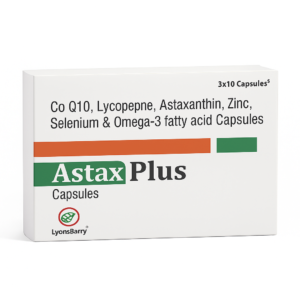
Astax Plus
₹998.00Astax Plus delivers a synergistic antioxidant formulation combining scientifically supported nutrients to promote cellular vitality, immune strength, cardiovascular health, and oxidative balance. Powered by clinically researched ingredients including CoQ10, Lycopene, Astaxanthin, Selenium, Zinc, and Omega-3, it ensures optimal performance for modern lifestyle needs.
Key Benefits (General Nutritional & Functional Support)
Supports cellular energy production and mitochondrial performance
Contributes to normal immune function
Provides powerful antioxidant defence
Assists in protecting cells from oxidative stress
Supports normal cardiovascular, skin, and eye health
Helps maintain healthy inflammatory response
Supports nutritional balance and daily wellness
Formulation & Product Consultation
₹4,369.00Our potential with our end-to-end formulation and product consultation services. Our team of seasoned experts provides strategic guidance from initial concept through to fully compliant, market-ready formulation. We specialize in optimizing active ingredients, selecting the most effective dosage forms, and navigating complex global regulatory pathways to ensure your product achieves both efficacy and approval. Leverage our deep expertise in pharmaceutical, nutraceutical, and cosmetic science to accelerate development timelines, enhance product stability and bioavailability, and de-risk your commercialization process. We act as your dedicated partner, providing actionable insights, robust stability study support, and strategic regulatory alignment to transform your vision into a successful, scalable, and profitable product ready for global distribution.